
Energy red vs Multisaft
Overall, Multisaft has the better nutritional profile on the measures we compare. It wins on 2 of our comparison points versus 1.
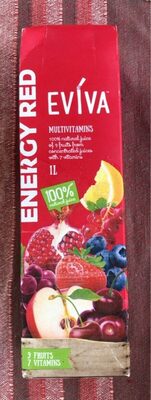
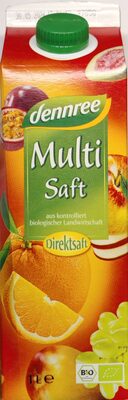
Nutrition per 100 ml
| Nutrient | Energy red | Multisaft |
|---|---|---|
| Nutri-Score | e | c |
| NOVA group | 1 | 1 |
| Calories | 49 kcal | 50 kcal |
| Fat | 0 g | 0.5 g |
| Saturated fat | 0 g | 0.1 g |
| Sugars | 11.6 g | 10.8 g |
| Salt | 0 g | 0 g |
| Fiber | 0.3 g | 0.5 g |
| Protein | 0.3 g | 0.5 g |
| Additives | 0 | 0 |
| Allergens | Apple | None listed |
Green = better value for that nutrient (less sugar, fat, salt and calories; more fiber and protein).
Key differences
- Energy red has no fat, while Multisaft has 0.5 g.
- Multisaft has the better Nutri-Score.
- Only Energy red lists: Apple.
Ingredients
Energy red
100% natural juice of 9 fruits from concentrated fuices. With 7 vitamins, Ingredients: juices from concentrates in varying proportions (apple, pomegranate, sour cherry, strawberry, red grape, redcurrant, billberry, lemon, cherry), vitamins (C, B6, B12, E, niacin, folic acid, pantothenic acid).
Multisaft
Bio Apfelsaft, Bio Orangensaft, Bio Traubensaft, Bio Möhrensaft, Bio Mangomark, Bio Bananenmark, Bio Acerolakirschmark, Bio Guavenmark, Bio Passionsfruchtsaft.
FAQ
Which is healthier: Energy red or Multisaft?
Overall, Multisaft has the better nutritional profile on the measures we compare. We compare Nutri-Score, processing level and seven nutrients per 100 g. Your own needs (for example low sugar or high protein) may make a different choice better for you.
Which has fewer calories?
Energy red has fewer calories: 49 kcal versus 50 kcal per 100 g.
Which has less sugar?
Multisaft has less sugar: 10.8 g versus 11.6 g per 100 g.