
Energy B12 vs Power Pak
Neither product is clearly better overall — it depends on what matters most to you.
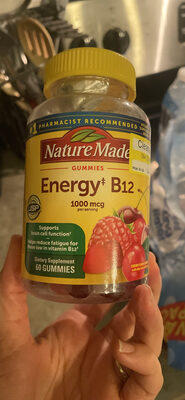
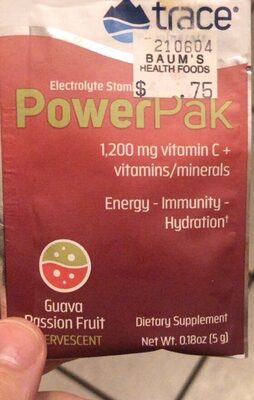
Nutrition per 100 g
| Nutrient | Energy B12 | Power Pak |
|---|---|---|
| Nutri-Score | c | — |
| NOVA group | 4 | 4 |
| Calories | 200 kcal | 300 kcal |
| Fat | 0 g | 0 g |
| Saturated fat | 0 g | 0 g |
| Sugars | 30 g | 20 g |
| Salt | 0 g | — |
| Fiber | 0 g | 0 g |
| Protein | 0 g | 0 g |
| Additives | 3 | 3 |
| Allergens | Gelatin | None listed |
Green = better value for that nutrient (less sugar, fat, salt and calories; more fiber and protein).
Key differences
- Energy B12 has 33% fewer calories (200 kcal vs 300 kcal).
- Power Pak has 33% less sugar (20 g vs 30 g).
- Only Energy B12 lists: Gelatin.
Ingredients
Energy B12
Water, Gelatin, Corn Syrup, Sugar, Palm Oil, Citric Acid, Pectin, Colors, Natural Flavors, Carnauba
Power Pak
Organic cane sugar, non-GMO citric acid, natural flavors blend, gum arabic (Acacia senegal), malic acid, Reb A, beet root (Beta vulgaris) (color), silica, Reb M (OnoSweet™), beta cartene (color), Vitamin C (as Ascorbic Acid), Vitamin D3 (as Cholecalciferol), Thiamin (as Thiamin HCL), Riboflavin, Niacin, Vitamin B6 (as Pyridoxine HCL), Folate (as 150mcg of Calcium L-5-Methyltetrahy-drofolate), Vitamin B12 (as Methylcobalamin), Pantothenic Acid (as d-Calcium Pantothenate), Calcium (as Calcium Lactate), Magnesium (from Magnesium Malate, CTM), Zinc (as Zinc Citrate), Selenium (as Sodium Selenite), Manganese (as Manganese Citrate), Chromium (as Chromium Picolinate), Sodium (as Sodium Bicarbonate), Potassium (from Potassium Citrate, CTM), ConcenTrace Trace Minerals (CTM), Alpha Lipoic Acid, Boron (from Boric Acid, CTM)
FAQ
Which is healthier: Energy B12 or Power Pak?
Neither product is clearly better overall — it depends on what matters most to you. We compare Nutri-Score, processing level and seven nutrients per 100 g. Your own needs (for example low sugar or high protein) may make a different choice better for you.
Which has fewer calories?
Energy B12 has fewer calories: 200 kcal versus 300 kcal per 100 g.
Which has less sugar?
Power Pak has less sugar: 20 g versus 30 g per 100 g.