
Electrolyte Drink Mix vs Lyte Peach Mango Sports Drink
Neither product is clearly better overall — it depends on what matters most to you.
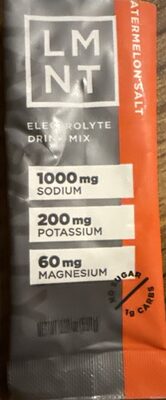
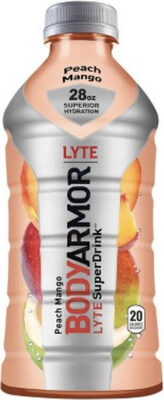
Nutrition per 100 g
| Nutrient | Electrolyte Drink Mix | Lyte Peach Mango Sports Drin... |
|---|---|---|
| Nutri-Score | — | a |
| NOVA group | 4 | 4 |
| Calories | 0 kcal | 4 kcal |
| Fat | 0 g | 0 g |
| Sugars | 0 g | 0.4 g |
| Salt | 41.7 g | 0 g |
| Protein | 0 g | 0 g |
| Additives | 2 | 8 |
| Allergens | None listed | None listed |
Green = better value for that nutrient (less sugar, fat, salt and calories; more fiber and protein).
Key differences
- Electrolyte Drink Mix has no sugar, while Lyte Peach Mango Sports Drink has 0.4 g.
- Lyte Peach Mango Sports Drink has 100% less salt (0 g vs 41.7 g).
Ingredients
Electrolyte Drink Mix
Salt (Sodium Chloride), Malic Acid, Magnesium Malate, Potassium Chloride, Natural Watermelon Flavor, Stevia Leaf Extract
Lyte Peach Mango Sports Drink
Filtered Water, Erythritol, Coconut Water, Concentrate, Citric Acid, Dipotassium Phosphate, (Electrolyte), Ascorbic Acid, (Vitamin C), Magnesium Oxide, (Electrolyte), Gum Arabic, Stevia, Sweetener, Natural Peach, Mango Flavor with other Natural, Flavors, Vegetable Juice, Concentrate (Color), Ester Gum, Calcium D-Pantothenate, (Vitamin B5), Niacinamide, (Vitamin B3), alpha-Tocopheryl, Acetate (Vitamin E), Zinc Oxide, (Electrolyte), Guar Gum, Pyridoxine Hydrochloride, (Vitamin B6), Vitamin A, Palmitate (Vitamin A), Folic Acid, (Vitamin B9), beta-apo-8'Carotenal (Color), Cyanocobalamin (Vitamin B12)
FAQ
Which is healthier: Electrolyte Drink Mix or Lyte Peach Mango Sports Drink?
Neither product is clearly better overall — it depends on what matters most to you. We compare Nutri-Score, processing level and seven nutrients per 100 g. Your own needs (for example low sugar or high protein) may make a different choice better for you.
Which has fewer calories?
Electrolyte Drink Mix has fewer calories: 0 kcal versus 4 kcal per 100 g.
Which has less sugar?
Electrolyte Drink Mix has less sugar: 0 g versus 0.4 g per 100 g.