
Curry Mango Papaya vs Ace passion fruit
Overall, Ace passion fruit has the better nutritional profile on the measures we compare. It wins on 6 of our comparison points versus 3.
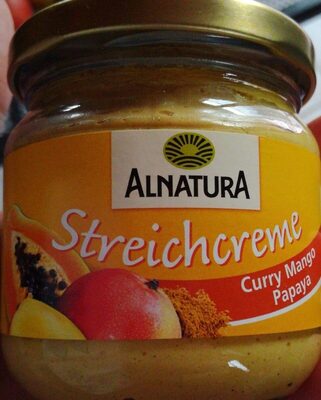
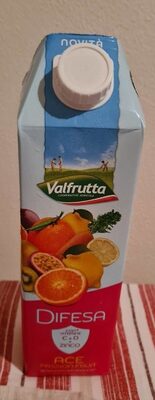
Nutrition per 100 g
| Nutrient | Curry Mango Papaya | Ace passion fruit |
|---|---|---|
| Nutri-Score | d | b |
| NOVA group | 3 | — |
| Calories | 363 kcal | 40 kcal |
| Fat | 34 g | 0.1 g |
| Saturated fat | 3.1 g | 0 g |
| Sugars | 6.1 g | 8.4 g |
| Salt | 1.3 g | 0 g |
| Fiber | 2.6 g | 0.1 g |
| Protein | 5.1 g | 0.3 g |
| Additives | 0 | 0 |
| Allergens | Mustard | None listed |
Green = better value for that nutrient (less sugar, fat, salt and calories; more fiber and protein).
Key differences
- Ace passion fruit has 89% fewer calories (40 kcal vs 363 kcal).
- Ace passion fruit has 100% less fat (0.1 g vs 34 g).
- Ace passion fruit has no saturated fat, while Curry Mango Papaya has 3.1 g.
- Curry Mango Papaya has 27% less sugar (6.1 g vs 8.4 g).
- Ace passion fruit has 98% less salt (0 g vs 1.3 g).
- Curry Mango Papaya has 96% more fiber (2.6 g vs 0.1 g).
- Curry Mango Papaya has 94% more protein (5.1 g vs 0.3 g).
- Ace passion fruit has the better Nutri-Score.
- Only Curry Mango Papaya lists: Mustard.
Ingredients
Curry Mango Papaya
Sonnenblumenöl*, Sonnenblumenkerne*, Wasser, Papaya* 10%, Mango* 10% , Zitronensaft* aus Ziftronensaftkonzentrat*, Äpfel*, Currypulver*, Apfelessig*, Apfelsaftkonzentrat*, Rohrohrzucker*, Meersalz, Gewürze*, _Senfmehl*_
Ace passion fruit
fin: voir ci-dessus. 1000 ml e use. Serv store in within 8 001440 134067 avant overture pour 2-3 CONSER agricola 40068 (BO). S di Coti HO TA RAC PLA da LE LA
FAQ
Which is healthier: Curry Mango Papaya or Ace passion fruit?
Overall, Ace passion fruit has the better nutritional profile on the measures we compare. We compare Nutri-Score, processing level and seven nutrients per 100 g. Your own needs (for example low sugar or high protein) may make a different choice better for you.
Which has fewer calories?
Ace passion fruit has fewer calories: 40 kcal versus 363 kcal per 100 g.
Which has less sugar?
Curry Mango Papaya has less sugar: 6.1 g versus 8.4 g per 100 g.