
Chile lime pork rinds vs Pork Krackles
Overall, Pork Krackles has the better nutritional profile on the measures we compare. It wins on 3 of our comparison points versus 1.

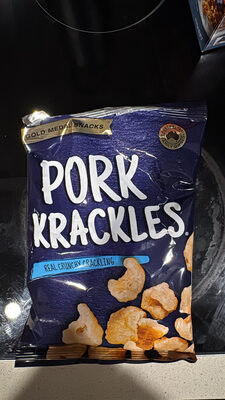
Nutrition per 100 g
| Nutrient | Chile lime pork rinds | Pork Krackles |
|---|---|---|
| Nutri-Score | e | e |
| NOVA group | 4 | 4 |
| Calories | 500 kcal | 547 kcal |
| Fat | 28.6 g | 32.6 g |
| Saturated fat | 10.7 g | 6.6 g |
| Sugars | 0 g | 0.1 g |
| Salt | 5.9 g | 3 g |
| Fiber | 0 g | 1 g |
| Protein | 64.3 g | 62.2 g |
| Additives | 4 | 6 |
| Allergens | None listed | Soybeans |
Green = better value for that nutrient (less sugar, fat, salt and calories; more fiber and protein).
Key differences
- Chile lime pork rinds has 12% less fat (28.6 g vs 32.6 g).
- Pork Krackles has 38% less saturated fat (6.6 g vs 10.7 g).
- Pork Krackles has 50% less salt (3 g vs 5.9 g).
- Pork Krackles has 100% more fiber (1 g vs 0 g).
- Only Pork Krackles lists: Soybeans.
Ingredients
Chile lime pork rinds
Pork rind, salt, chile pepper, paprika, maltodextrin, yeast extract, citric acid, dextrose, malic acid, onion powder, tomato powder, spices, garlic powder, paprika oleoresin, distilled white vinegar, natural flavor, lime juice, lemon juice, lactic acid.
Pork Krackles
pork rind, vegetable oil, salt, hydrolysed soy proteins, tapioca starch, yeast extract, flavour enhancer (621), anticaking agent (504,551, 341), food acid (262), colour (150c), herbs and spices, vegetable powders, flavour. pork rind used for this product may have edible coloured stampings. contains soybean or soybean products. made in australia from imported and local ingredients.
FAQ
Which is healthier: Chile lime pork rinds or Pork Krackles?
Overall, Pork Krackles has the better nutritional profile on the measures we compare. We compare Nutri-Score, processing level and seven nutrients per 100 g. Your own needs (for example low sugar or high protein) may make a different choice better for you.
Which has fewer calories?
Chile lime pork rinds has fewer calories: 500 kcal versus 547 kcal per 100 g.
Which has less sugar?
Chile lime pork rinds has less sugar: 0 g versus 0.1 g per 100 g.