
2 Pavés de Sanglier Marinés aux Cèpes vs Sanglier au poivre de Sichuan
Overall, 2 Pavés de Sanglier Marinés aux Cèpes has the better nutritional profile on the measures we compare. It wins on 2 of our comparison points versus 0.
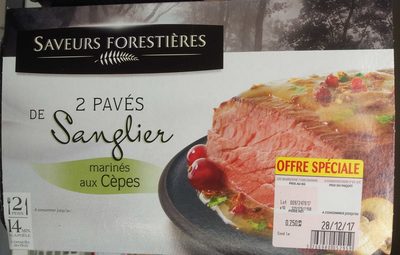
2 Pavés de Sanglier Marinés aux Cèpes
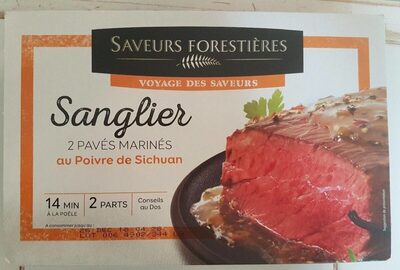
Sanglier au poivre de Sichuan
Nutrition per 100 g
| Nutrient | 2 Pavés de Sanglier Marinés... | Sanglier au poivre de Sichua... |
|---|---|---|
| Nutri-Score | a | c |
| NOVA group | 4 | 4 |
| Calories | 115 kcal | 109 kcal |
| Fat | 2.4 g | 2.5 g |
| Saturated fat | 0.8 g | 0.8 g |
| Sugars | 0.9 g | 1.2 g |
| Salt | 1.4 g | 1.5 g |
| Protein | 22 g | 20 g |
| Additives | 3 | 3 |
| Allergens | Gluten | Gluten |
Green = better value for that nutrient (less sugar, fat, salt and calories; more fiber and protein).
Ingredients
2 Pavés de Sanglier Marinés aux Cèpes
Pavé de sanglier origine UE ou hors UE : 89 %, marinade avec cèpes : 11 % (eau, sel, dextrose, arômes, chapelure (dont _blé_), champignons forestiers déshydratés (bolets, cèpes : 1 %), plantes aromatiques, levure, sucre, épices, carotte déshydratée, poivrons déshydratés, extraits d'épices, acidifiants : acétate de sodium, lactate de sodium).
Sanglier au poivre de Sichuan
dauphines ou bien de fruits (cerises, pêches). SANGLIER - 2 PAVÉS MARINÉS AU POIVRE DE SICHUAN Ingrédients (à la mise en oeuvre) : Viande de Sanglier origine UE ou hors UE : 92%, marinade au poivre de Sichuan : 8% (eau, maltodextrine de pomme de terre et blé, sel, épices (dont poivre de Sichuan : 0.02%), poivron rouge, arômes, persil, poudre d'oignon,poudre d'ail, extraits d'épices, acidifiants : acétate de sodium et lactate de calcium).
FAQ
Which is healthier: 2 Pavés de Sanglier Marinés aux Cèpes or Sanglier au poivre de Sichuan?
Overall, 2 Pavés de Sanglier Marinés aux Cèpes has the better nutritional profile on the measures we compare. We compare Nutri-Score, processing level and seven nutrients per 100 g. Your own needs (for example low sugar or high protein) may make a different choice better for you.
Which has fewer calories?
Sanglier au poivre de Sichuan has fewer calories: 109 kcal versus 115 kcal per 100 g.
Which has less sugar?
2 Pavés de Sanglier Marinés aux Cèpes has less sugar: 0.9 g versus 1.2 g per 100 g.