
Disodium inosinate & guanylate (E627 / E631)
Updated November 2, 2026
Disodium inosinate (E631) and disodium guanylate (E627) are flavour enhancers made from nucleotides — the same building blocks found in DNA and RNA, and in meat, fish and mushrooms. Regulators treat them as low concern: both are approved in the US, permitted in the EU, and carry an acceptable daily intake of "not specified" from the WHO/FAO expert committee. The one genuine caveat is that they are purines, and large amounts can raise blood uric acid — which matters for people with gout and for anyone on uric-acid-retaining diuretics.
Quick facts
- Also known as
- Disodium inosinate, Disodium guanylate, Disodium 5'-ribonucleotides, E627, E631, E635
- E-number
- E627 / E631
- Function
- Flavor enhancers
- US status
- Approved food additives: disodium guanylate as a flavor enhancer (21 CFR 172.530), disodium inosinate as a flavoring adjuvant (21 CFR 172.535), both limited to the amount reasonably required
- EU status
- Permitted as E627 and E631, within the group E626–E635. EFSA's re-evaluation is still open
- Acceptable daily intake
- Not specified — no numerical limit, as group figures covering guanylic and inosinic acid and their calcium, disodium and dipotassium salts (JECFA, 1985 and 1993)
- Found in
- 12,555 products (7,092 sold in the US)
- Foodmetria concern level
- Low concern How we rate additives
What is Disodium inosinate & guanylate?
These are nucleotide salts. Inosinate and guanylate are the salts of inosinic acid and guanylic acid — purine nucleotides, the same class of molecule your body uses to build RNA and DNA, and the same compounds that give aged meat, dried fish and dried mushrooms their savoury depth.
They belong to a block of ten related additives, and labels use the names almost interchangeably:
- E626 guanylic acid, E627 disodium guanylate, E628 dipotassium guanylate, E629 calcium guanylate
- E630 inosinic acid, E631 disodium inosinate, E632 dipotassium inosinate, E633 calcium inosinate
- E634 calcium 5'-ribonucleotides and E635 disodium 5'-ribonucleotides — mixtures of the inosinate and guanylate forms
E631 and E635 are the ones you will actually see, usually in snack seasonings. On a US label they appear as "disodium inosinate," "disodium guanylate" or "disodium 5'-ribonucleotides."
In the US each is regulated separately and briefly. Disodium guanylate "may be safely used as a flavor enhancer in foods." Disodium inosinate is defined as the disodium salt of inosinic acid, carrying seven and a half molecules of water, manufactured and purified to contain no more than 150 parts per million of soluble barium — one of the few numerical specifications in the file.
A commercial route is documented: when EFSA assessed disodium 5'-inosinate as a feed additive in 2023, the material being assessed was produced by bacterial fermentation using Corynebacterium stationis. That is a feed assessment rather than a food one, but it shows the production method is microbial rather than extractive.
Why is Disodium inosinate & guanylate used in food?
They make savoury food taste more savoury, at tiny inclusion levels. US regulation classifies disodium guanylate as a flavour enhancer and disodium inosinate as a flavouring adjuvant, and limits both to the amount reasonably required to produce the intended effect — there is no numerical ceiling because none is needed; they stop working usefully long before any large amount would be used.
Where they turn up:
- Savoury snacks — chips, crisps, extruded snacks, seasoning dusts. This is the dominant category.
- Instant noodles, soups, broths and bouillon
- Seasoning mixes, gravies and sauces
- Processed and canned meats
- Plant-based meat alternatives, where the missing savoury depth has to be built back in
They sit in the same European block as the glutamates (E 620–E 625), and the UK list of permitted additives groups both families together — which is a reasonable clue to the relationship. They are not, however, the same substance as MSG, and a product containing disodium inosinate does not thereby contain MSG. See the FAQ.
We did not find a regulatory or primary source describing how much these compounds amplify flavour, or quantifying any combined effect with glutamate, so this page does not put numbers on it.
Is Disodium inosinate & guanylate safe? What the research says
What regulators say. Both additives are approved in the US with no numerical limit beyond good manufacturing practice, and both are permitted in the EU and the UK. Neither appears on FDA's list of chemicals under post-market review.
The WHO/FAO expert committee (JECFA) has assigned an ADI of "not specified" throughout. It set group figures in 1985 covering guanylic acid and its calcium, disodium and dipotassium salts, and inosinic acid and its salts, and confirmed the position for disodium guanylate and disodium inosinate at its 41st meeting in 1993. The ribonucleotide mixtures were given the same status back in 1974. The committee's stated reason is that intake "does not represent a health hazard."
The purine question — the one thing on this page that matters. Inosinate and guanylate are purines, and purines are metabolised to uric acid. JECFA addressed this directly in its 1974 monograph, and the findings are specific enough to be useful:
- The breakdown of these compounds to uric acid and allantoin occurs in most mammals but not in man — people stop at uric acid. That is why the question arises for humans and not for the test species.
- The committee's conclusion, in its own words: "ingestion of large amounts of these compounds by man can increase the serum uric acid level."
- In volunteer studies, doses of 250 to 4,000 mg a day raised both serum uric acid and urinary uric acid output at the higher levels. In a separate group of three men on low-purine diets, 2 g a day did not push serum uric acid above the normal range and caused no adverse effects. These are small human studies, and should be read as such.
- The groups the committee named explicitly: "people with gouty diathesis and those taking uric-acid retaining diuretics." It suggested a mention on the label might be appropriate for them.
And the part that keeps it in proportion. The same committee set the dietary context itself: "the changes in dietary purine intake from the use of flavour enhancers are no greater than those likely to be occasioned by changes in consumption of those dietary items." In other words, the purine load from a seasoning is in the same range as the day-to-day variation from eating more or less meat, fish or pulses. That is why the conclusion was an unlimited ADI rather than a restriction — and why this page rates these additives low concern, with a named caveat rather than a warning.
The European file is unfinished. These additives were permitted before 2009 and are subject to EFSA's re-evaluation programme. EFSA issued a call for data covering all ten (E 626–E 635) on 28 June 2023, with a submission deadline of 31 March 2024; that call has expired. As of the panel's plenary meeting in July 2026, ribonucleotides were still listed among the re-evaluations in progress, so no EFSA opinion exists yet and there is no European ADI. The current European position rests on the older assessments. An open re-evaluation is a documentation gap, not a safety signal — but it does mean the numbers on this page could change when the opinion appears.
What there is no evidence for. We found no regulatory basis for linking these additives to headaches, so-called "Chinese restaurant syndrome," psoriasis flares or kidney stones, and this page does not claim any. The uric acid finding above is the only mechanism regulators have documented.
Disodium inosinate & guanylate regulation: US vs EU
| Region | Status |
|---|---|
| United States — disodium guanylate | Approved food additive, may be safely used as a flavor enhancer in foods (21 CFR 172.530), in an amount not exceeding that reasonably required to produce the intended effect. Issued 1977. No numerical maximum, no infant food restriction. |
| United States — disodium inosinate | Approved food additive, used as a flavoring adjuvant (21 CFR 172.535). Must be manufactured and purified to contain no more than 150 ppm soluble barium. Neither additive is on FDA's post-market review list. |
| European Union | All of E 626 to E 635 permitted. EFSA's re-evaluation is open: a call for data covering the group was published 28 June 2023 and expired 31 March 2024, and the assessment was still in progress at the panel's July 2026 plenary. No EU ADI has been set. |
| United Kingdom | All of E 626 to E 635 permitted, listed among the other flavour enhancers. |
| JECFA (WHO/FAO) | ADI "not specified" — group figures for guanylic acid and inosinic acid with their calcium, disodium and dipotassium salts, set in 1985 and confirmed in 1993; the ribonucleotide mixtures (E 634, E 635) have held the same status since 1974. |
No ban, phase-out or state restriction applies to any of these additives anywhere we checked.
- United States. Disodium guanylate is an approved food additive as a flavour enhancer (21 CFR 172.530, issued in 1977); disodium inosinate is approved as a flavouring adjuvant (21 CFR 172.535), with a purity requirement of no more than 150 ppm soluble barium. Both are limited to the amount reasonably required to produce the intended effect. Neither is on FDA's post-market review list, whose table was last updated in May 2026. Neither carries an infant food restriction.
- European Union and United Kingdom. All ten of E 626 to E 635 are permitted, grouped with the other flavour enhancers.
- JECFA. ADI "not specified," as group figures set in 1985 and confirmed in 1993, with the ribonucleotide mixtures covered since 1974.
The open European item. The ten additives fall under the EU's obligation to re-evaluate everything authorised before 20 January 2009. That programme was supposed to finish by the end of December 2020 and did not, so EFSA reopened the file: a call for data published on 28 June 2023 asked for published and unpublished studies, use levels and categories where the additives are not used, with a deadline of 31 March 2024. The call is now closed and the assessment was still in progress at the panel's July 2026 plenary.
What to expect when it lands: either a confirmation that no numerical limit is needed, or — as has happened with several additives recently — a numerical ADI derived from whatever the new dataset supports. Given the purine findings above, the exposure assessment will be the interesting part.
Who should limit or avoid Disodium inosinate & guanylate?
- People with gout, or a family history of it. This is the group regulators named. Purines are metabolised to uric acid, and JECFA stated plainly that large amounts of these compounds can raise serum uric acid, specifically identifying "people with gouty diathesis." The same committee also put the amounts in context: the purine shift from flavour enhancers is comparable to normal variation in how much meat or fish you eat. If you manage gout by watching purines, these additives belong on the same list as those foods — not on a separate, scarier one.
- Anyone taking a diuretic that retains uric acid. Named by the committee alongside gout, for the same reason. Worth raising with whoever prescribes it rather than acting on a label alone.
- Vegetarians and vegans. The honest answer is that the label will not tell you. US regulations do not require the source material to be declared, and nucleotides can in principle be obtained from several starting points. The one production route we could document is microbial: EFSA's 2023 assessment of a commercial disodium inosinate — as a feed additive — described it as produced by fermentation with Corynebacterium stationis. If this matters to you, the manufacturer is the only reliable answer.
- People who avoid MSG. These are different compounds, and a product listing disodium inosinate is not a product containing MSG. If you avoid MSG because you believe you react to it, note that the two families are chemically unrelated — an amino acid salt versus a nucleotide salt.
- Parents. No infant food restriction applies to these additives in the US, and JECFA's separate caution about infants under three months concerns the glutamates, not the ribonucleotides. We have not carried that caveat across, because it is not about these substances.
Foods that commonly contain Disodium inosinate & guanylate
Share of published products in each category whose ingredient list includes Disodium inosinate & guanylate.
Popular products with Disodium inosinate & guanylate
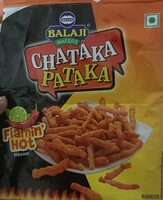 d NOVA 4
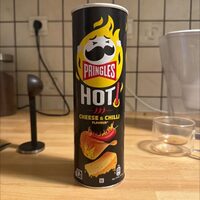 c NOVA 4
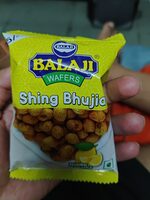 e NOVA 4
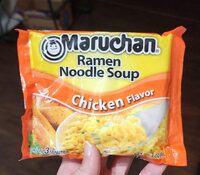 NOVA 4
 e NOVA 4
 d NOVA 4
 e NOVA 4
 c NOVA 4
 e NOVA 4
 d NOVA 4
Disodium inosinate & guanylate-free alternatives
Popular products from the same categories that don't list Disodium inosinate & guanylate and score Nutri-Score A–C.
 c NOVA 4
 c NOVA 3
 b NOVA 4
 b NOVA 3
 b NOVA 4
How to spot Disodium inosinate & guanylate on a label
Look for any of these names in the ingredient list:
Related additives
Frequently asked questions
Is disodium inosinate or disodium guanylate the same as MSG?
No. MSG is the sodium salt of glutamic acid, an amino acid. These are salts of nucleotides — purine compounds related to the building blocks of RNA. They are both classed as flavour enhancers and the EU numbers them in adjacent blocks, but they are chemically unrelated, and a product that lists disodium inosinate does not therefore contain MSG.
Are disodium inosinate and guanylate bad for you?
Regulators treat them as low concern. Both are approved in the US and permitted in the EU and UK, and the WHO/FAO expert committee gives them an acceptable daily intake of "not specified," stating that intake does not represent a health hazard. The one documented caveat is that they are purines, and large amounts can raise blood uric acid.
Do they cause gout?
The evidence does not support that framing. Purines are metabolised to uric acid, and JECFA found that ingesting large amounts of these compounds can raise serum uric acid, naming people with a gouty tendency and those on uric-acid-retaining diuretics as the groups to consider. But the same committee noted that the purine change from flavour enhancers is no greater than the variation from eating more or less of ordinary purine-rich foods, and it set no limit. In volunteers, 2 g a day on a low-purine diet did not push uric acid above the normal range.
Are they vegetarian or vegan?
The label will not tell you, because US regulations do not require the source material to be declared. The one production route we could document is microbial: EFSA, assessing a commercial disodium inosinate as a feed additive in 2023, described it as produced by fermentation with the bacterium Corynebacterium stationis. If the answer matters for your diet, the manufacturer is the only reliable source.
How much is safe per day?
No number has been set. JECFA's acceptable daily intake is "not specified" for the whole group, which is the category used where a numerical limit would serve no purpose, and the US regulations limit use to the amount reasonably required to produce the intended effect rather than to a daily figure. The EU has not set an ADI either, because its re-evaluation is still open.
Why are they usually listed together?
Because they are closely related compounds that do the same job, and the mixtures of the two (E 634 and E 635) are supplied as a single ingredient. We did not find a regulatory source describing how they interact with each other or with glutamate, so this page does not put figures on any combined effect.
What foods contain them?
Mostly savoury: chips and other snack seasonings, instant noodles, soups, broths and bouillon cubes, seasoning mixes, gravies and sauces, processed and canned meats, and plant-based meat alternatives. See the products and categories above for what is in our database.
Sources & references
- 21 CFR 172.530 — Disodium guanylate
- 21 CFR 172 subpart F — includes § 172.535 Disodium inosinate
- JECFA — Calcium and sodium 5'-ribonucleotides. WHO Food Additives Series 6 (1975), evaluations of the 18th meeting
- JECFA — Disodium 5'-guanylate, evaluation summary (ADI "not specified")
- JECFA — Disodium 5'-inosinate, evaluation summary (ADI "not specified")
- EFSA — Call for data for the re-evaluation of ribonucleotides (E 626-635) as food additives
- EFSA FEEDAP (2023). Safety of the feed additive consisting of disodium 5'-inosinate (IMP) produced by Corynebacterium stationis KCCM 80235 for all animal species. EFSA Journal 21(4)
- UK Government — Approved additives and E numbers
- U.S. FDA — List of Select Chemicals in the Food Supply Under FDA Review
Product data: Open Food Facts (ODbL), updated daily. Additive information is for general education and is not medical advice. Always check the package label. Our methodology.