
Baking soda (sodium bicarbonate, E500)
Updated November 9, 2026
Baking soda is sodium bicarbonate — the same substance whether it comes from the box in your cupboard or appears on an ingredient list as E500. It raises baked goods by reacting with an acid to release carbon dioxide, and it also works as an alkali and a buffer. Regulators treat it as about as unremarkable as a food additive gets: affirmed GRAS in the US with no numerical limit, and an acceptable daily intake of "not limited" from the WHO/FAO expert committee since 1965. The one thing worth attention is sodium: a bit over a quarter of its weight is sodium, and FDA counts it among the additives that add sodium to a food.
Quick facts
- Also known as
- Sodium bicarbonate, Bicarbonate of soda, E500
- E-number
- E500
- Function
- Leavening agents
- US status
- Affirmed GRAS as a direct food ingredient (21 CFR 184.1736), used with no limitation other than current good manufacturing practice; separately permitted as an over-the-counter antacid drug ingredient (21 CFR 331.11)
- EU status
- Permitted as E500 (sodium carbonates). In EFSA's re-evaluation programme since a 2012 call for data, but no opinion had been published as of November 2026
- Acceptable daily intake
- Not limited (JECFA, 1965)
- Found in
- 84,639 products (37,525 sold in the US)
- Foodmetria concern level
- Low concern How we rate additives
What is Baking soda?
Sodium bicarbonate, NaHCO3, CAS number 144-55-8. US regulation describes how it is made in plain terms: a sodium carbonate solution, or a sodium carbonate and sodium bicarbonate solution, is treated with carbon dioxide; "as carbon dioxide is absorbed, a suspension of sodium bicarbonate forms"; the slurry is then filtered, and the cake is washed and dried.
In Europe the additive number E500 covers the whole carbonate family: E500(i) sodium carbonate, E500(ii) sodium hydrogen carbonate — which is baking soda — and E500(iii) sodium sesquicarbonate. The UK list does not split them and simply says "sodium carbonates." So "E500" on a label does not by itself tell you which of the three is in there, though in food the bicarbonate is by far the most common.
The WHO/FAO expert committee classifies sodium hydrogen carbonate under three functional headings, and they are worth quoting because US regulation lists no functions at all: alkali, leavening agent, buffer.
The unusual thing about baking soda among food additives is that it is not an industrial ingredient that happens to reach consumers. It is sold on supermarket shelves as itself. US drug regulation even acknowledges this: a product containing only sodium bicarbonate powder that is "intended primarily for other than drug uses" is exempt from the standard "keep out of the reach of children" warning.
Why is Baking soda used in food?
Leavening, which needs an acid. Baking soda on its own is not a raising agent — it needs something acidic to react with. US regulation for self-rising flour states the pairing exactly: an acid-reacting substance (monocalcium phosphate, sodium acid pyrophosphate or sodium aluminium phosphate) is added "in sufficient quantity to neutralize the sodium bicarbonate," the two together are limited to 4.5 parts per 100 parts of flour, and the flour must evolve not less than 0.5 percent carbon dioxide. That gas is the whole mechanism, written into law as a test. It is also why recipes pair soda with buttermilk, yoghurt, molasses, cocoa or vinegar, and why products sold as baking powder combine soda with an acid-reacting substance so the cook does not have to.
Alkali. Where a process needs the pH pushed up rather than down, sodium bicarbonate does it mildly — mildly enough that it is used in foods rather than only in plant.
Buffer. The same chemistry that makes it an alkali makes it useful for holding a pH steady, which is why it appears in drinks, fillings and sauces where an ingredient list gives no hint of baking.
US regulation imposes no numerical limits on any of this: the ingredient "is used in food with no limitation other than current good manufacturing practice." In practice the limit is culinary. Too much soda and not enough acid leaves an unreacted alkaline residue that tastes soapy, so recipes self-police.
Is Baking soda safe? What the research says
What regulators say. This is the shortest safety section on this site, and the brevity is the finding.
In the US, sodium bicarbonate is affirmed GRAS as a direct food ingredient, used "with no limitation other than current good manufacturing practice." The regulation sets no levels, names no categories, and carries no infant food restriction. It is not on FDA's list of chemicals under post-market review.
The WHO/FAO expert committee (JECFA) evaluated it in 1965 and recorded an acceptable daily intake of "not limited" — the category used for substances of such low toxicity that putting a number on them serves no purpose. That evaluation has not been revisited, which in this case reflects the absence of a question rather than neglect.
The European picture is unfinished. Sodium carbonates are permitted as E500 in the EU and the UK, and they are genuinely inside EFSA's re-evaluation programme: EFSA's 2012 call for data on miscellaneous additives lists E 500(i), (ii) and (iii) by name among the acidity regulators to be re-assessed, under the programme set up by Regulation (EU) No 257/2010. As of November 2026 we could not find a published EFSA opinion on E 500, and carbonates do not appear among the current re-evaluations or the follow-up items in the most recent public work list of EFSA's food additives panel. So this is a documentation gap of long standing, not a safety finding — the same situation as citric acid and the citrates elsewhere on this site.
What is actually worth attention: sodium. From the formula given in the US regulation, a bit over a quarter of sodium bicarbonate's weight is sodium. In most baked goods the amount used is small, but FDA names "sodium bicarbonate (baking soda)" directly in its list of additives that contribute sodium to food, alongside MSG, sodium nitrite and sodium benzoate — adding, in FDA's words, "in lesser amounts." The context is that Americans average about 3,400 mg of sodium a day against a Dietary Guidelines limit of less than 2,300 mg, and that "most dietary sodium (over 70%) comes from eating packaged and prepared foods" rather than from the salt shaker. FDA also makes a point that applies squarely to baking: taste is not a reliable guide, because cereals and pastries can be high in sodium without tasting salty.
Whatever the source, the sodium is already counted in the sodium line of the Nutrition Facts panel. The useful rule of thumb FDA gives is that 5 percent of the Daily Value or less per serving is low and 20 percent or more is high.
The same substance, a stricter rule as a medicine. The clearest demonstration that dose and purpose decide everything is that US regulation treats sodium bicarbonate twice. As a food ingredient it has no numerical limit. As an over-the-counter antacid active ingredient it does: a maximum daily dosage limit of 200 mEq of sodium for people up to 60 years old, and 100 mEq for people aged 60 or over — half as much for the older group. Nothing about the molecule changes between the cupboard and the medicine cabinet; what changes is how much of it a person takes on purpose.
Baking soda regulation: US vs EU
| Region | Status |
|---|---|
| United States | Affirmed GRAS as a direct human food ingredient (21 CFR 184.1736), used with no limitation other than current good manufacturing practice. No numerical levels, no infant food restriction. Not on FDA's post-market review list. |
| United States — over-the-counter drug | Permitted antacid active ingredient (21 CFR 331.11) with a maximum daily dosage limit of 200 mEq of sodium for people up to 60 years old and 100 mEq for people 60 or older. |
| United States — self-rising flour | Named in the standard of identity (21 CFR 137.180): an acid-reacting substance is added "in sufficient quantity to neutralize the sodium bicarbonate," with at least 0.5 percent carbon dioxide evolved. |
| European Union | Permitted as E500, covering E 500(i) sodium carbonate, E 500(ii) sodium hydrogen carbonate and E 500(iii) sodium sesquicarbonate. Listed by name in EFSA's 2012 call for data, but no re-evaluation opinion had been published as of November 2026. |
| United Kingdom | Permitted as E500, listed as "sodium carbonates" without sub-forms. |
| JECFA (WHO/FAO) | Acceptable daily intake "not limited" (1965). Classified as an alkali, leavening agent and buffer. |
| US states | Not named in Texas SB 25 or Louisiana SB 14, the two 2025 warning-label laws. |
Permitted everywhere we checked, with nothing pending anywhere.
- United States. Affirmed GRAS as a direct food ingredient (21 CFR 184.1736), used with no limitation other than current good manufacturing practice, with no category levels and no infant food restriction. The regulation dates from November 1983.
- United States, as a medicine. Listed as a permitted over-the-counter antacid active ingredient (21 CFR 331.11), with a maximum daily dosage limit of 200 mEq of sodium for people under 60 and 100 mEq for people aged 60 and over.
- United States, in flour. Named in the standard of identity for self-rising flour (21 CFR 137.180), where an acid-reacting substance must be present in sufficient quantity to neutralise it.
- European Union and United Kingdom. Permitted as E500, "sodium carbonates," covering sodium carbonate, sodium hydrogen carbonate and sodium sesquicarbonate. Included in EFSA's re-evaluation programme since 2012; no opinion published as of November 2026.
- JECFA. Acceptable daily intake "not limited," set in 1965.
- FDA post-market review. Not on the list, whose table carries an "as of May 12, 2026" date.
- US state laws. Not named in Texas SB 25 or Louisiana SB 14, the two 2025 warning-label laws.
The most likely future change to this page is the publication of EFSA's long-pending opinion on the carbonates.
Who should limit or avoid Baking soda?
- Anyone managing sodium intake. The only group with a practical reason to care, and the advice is to read the sodium figure on the Nutrition Facts panel rather than hunt for the ingredient. FDA's reminder is the useful one: baked goods can be high in sodium without tasting salty.
- People with chronic kidney disease or high blood pressure. NIDDK notes that too much sodium makes the blood retain fluid, which can raise blood pressure and cause swelling, "putting stress on your kidneys and heart," and that many people with kidney disease need to go below the general 2,300 mg limit. As with everyone else, most of that sodium comes from packaged, prepared and restaurant food rather than a saltshaker.
- People using baking soda as an antacid. US drug regulation caps the daily dose at 200 mEq of sodium, and at 100 mEq from age 60. That is a drug dose question rather than a food question, and it is worth asking a pharmacist or doctor rather than guessing with a spoon.
- People avoiding "additives" in general. E500 is a reasonable place to stop worrying. It is the box of baking soda, under a number.
- Vegans and people keeping halal or kosher. Sodium bicarbonate is made by treating a sodium carbonate solution with carbon dioxide, per the US regulation — a wholly mineral route with no animal step.
Foods that commonly contain Baking soda
Share of published products in each category whose ingredient list includes Baking soda.
Popular products with Baking soda
 c NOVA 4
 e NOVA 4
 e NOVA 4
 e NOVA 4
 e NOVA 4
 NOVA 4
 e NOVA 4
 e NOVA 4
 e NOVA 4
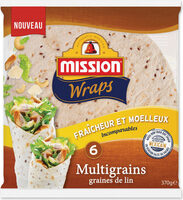 a NOVA 4
Baking soda-free alternatives
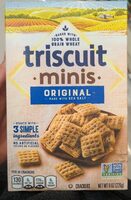
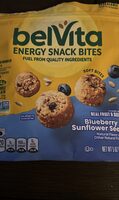
Popular products from the same categories that don't list Baking soda and score Nutri-Score A–C.
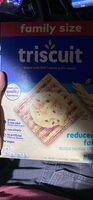 c NOVA 3
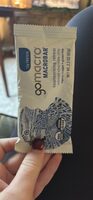 c NOVA 4
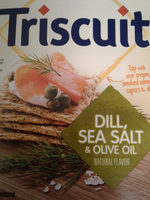 c NOVA 4
 c NOVA 3
 c NOVA 4
How to spot Baking soda on a label
Look for any of these names in the ingredient list:
Related additives
Frequently asked questions
Is baking soda bad for you?
Regulators treat it as about as low-concern as an additive gets. It is affirmed GRAS in the US with no numerical limit, and the WHO/FAO expert committee has given it an acceptable daily intake of "not limited" since 1965. The only consideration worth noting is sodium: a bit over a quarter of its weight is sodium, and FDA counts it among the additives that contribute sodium to food.
Is baking soda the same as E500?
Baking soda is sodium bicarbonate, which is E500(ii). The number E500 is broader — it also covers sodium carbonate, E500(i), and sodium sesquicarbonate, E500(iii) — and the UK list simply calls the whole group "sodium carbonates." So E500 on a label almost always means baking soda in food, but the number itself does not pin it down.
Is baking soda the same as baking powder?
No. Baking soda is a single substance and does nothing on its own; it needs an acid to release carbon dioxide. US regulation for self-rising flour describes exactly that pairing — an acid-reacting substance added "in sufficient quantity to neutralize the sodium bicarbonate," with at least 0.5 percent carbon dioxide evolved. Products sold as baking powder combine the soda with such an acid so that the cook does not have to supply one.
Is E500 vegan, halal and gluten-free?
Yes on all three. US regulation describes the manufacturing route: a sodium carbonate solution is treated with carbon dioxide, the suspension is filtered, and the cake is washed and dried. There is no animal step and no cereal step, and the finished ingredient contains no protein.
How much sodium does baking soda add to food?
Sodium bicarbonate is a bit over a quarter sodium by weight, calculated from the formula in the US regulation. In a cake or a batch of biscuits the contribution is usually small, and FDA describes additives like it as adding sodium "in lesser amounts" than salt. Either way it is already included in the sodium line of the Nutrition Facts panel — 5 percent of the Daily Value or less per serving is low, 20 percent or more is high.
Can you take baking soda for heartburn?
US regulation does allow sodium bicarbonate as an over-the-counter antacid, which tells you two things: it works, and there is a dose ceiling. The limit is 200 mEq of sodium a day for people under 60 and 100 mEq for people 60 or over — half as much for the older group. That is a medicine dose rather than a cooking measure, so it is worth asking a pharmacist or doctor rather than estimating with a spoon. This page is not medical advice.
What foods contain E500?
Baked goods of every kind, self-rising and pancake mixes, biscuits and crackers, some chocolate and cocoa products, soft drinks and effervescent powders, and a long tail of products where it holds a pH steady rather than raising anything. See the products and categories above for what is in our database.
Sources & references
- 21 CFR 184.1736 — Sodium bicarbonate (affirmed GRAS)
- 21 CFR 331.11 — Antacid active ingredients, including sodium bicarbonate and its daily sodium limits
- 21 CFR 137.180 — Self-rising flour (acid-reacting substance neutralising the sodium bicarbonate)
- JECFA — Evaluation of sodium hydrogen carbonate, INS 500(ii): ADI "not limited" (1965)
- EFSA (2012) — Call for scientific data on miscellaneous food additives permitted in the EU (lists E 500(i)–(iii))
- U.S. FDA — Sodium in Your Diet
- NIDDK (NIH) — Eating right for chronic kidney disease
- UK Government — Approved additives and E numbers
- U.S. FDA — List of Select Chemicals in the Food Supply Under FDA Review
Product data: Open Food Facts (ODbL), updated daily. Additive information is for general education and is not medical advice. Always check the package label. Our methodology.