
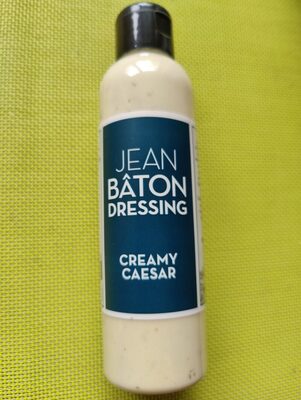
View full-size photo · Photo: Open Food Facts contributors, CC BY-SA
Creamy Caesar
Creamy Caesar by Jeun Baton provides 488 kcal per 100 g, with 7.3 g of sugars and 1.4 g of protein. It is classified as NOVA 4 (ultra-processed food). It comes in a 150ml pack. Contains: milk, mustard.
Nutrient levels per 100 g
Levels use UK front-of-pack reference thresholds.
Nutrition facts
Serving size: 23 gram
| Nutrient | Per 100 g | Per serving | % DV* |
|---|---|---|---|
| Calories | 488 kcal | 112 kcal | |
| Total fat | 50 g | 11.5 g | 15% |
| Saturated fat | 4.4 g | 1 g | 5% |
| Carbohydrates | 8.1 g | 1.9 g | 1% |
| Total sugars | 7.3 g | 1.7 g | |
| Added sugars | 6.1 g | 1.4 g | 3% |
| Dietary fiber | 0.2 g | 0 g | 0% |
| Protein | 1.4 g | 0.3 g | 1% |
| Salt | 1.4 g | 0.3 g |
*% Daily Value for a serving, based on a 2,000-calorie diet (FDA reference values).
Ingredients
Raapzaadolie, water, azijn, suiker, kaas 4% (MELK, zout, zuursel, microbieel stremsel), gepasteuriseerd SCHARRELKIPEIDOOIER, zout, knoflook 1%, MOSTERDZAAD, ui, bieslook 0,1%, kruiden en specerijen, verdikkingsmiddel: xanthaangom, antioxidant: E385
- Allergens
- MilkMustard
Additives 2
Overexposure risk is based on EFSA evaluations as recorded by Open Food Facts.
Product details
- Quantity
- 150ml
- Serving size
- 23 gram
- Sold in
- Germany, Netherlands
- Barcode
- 8720791224318
Prices reported by shoppers
Loading prices…
Frequently asked questions
How many calories are in Creamy Caesar?
Creamy Caesar contains 488 kcal per 100 g and about 112 kcal per serving (23 gram).
How much sugar is in Creamy Caesar?
Creamy Caesar has 7.3 g of sugars per 100 g, which is considered moderate by UK front-of-pack guidelines.
Is Creamy Caesar healthy?
It is in NOVA group 4 — ultra-processed food. Scores describe nutritional quality and processing, not suitability for your individual diet.
Is Creamy Caesar vegan?
Based on its ingredient list, it is not vegan.
What allergens does Creamy Caesar contain?
According to the label data it contains: Milk, Mustard. Recipes change — always check the package label.
Source: Open Food Facts (ODbL). Last updated September 4, 2026. Spotted a mistake? Edit this product on Open Food Facts. Not medical advice — always check the package label.