
Tartiflette reblochon vs Tartiflette
Overall, Tartiflette reblochon has the better nutritional profile on the measures we compare. It wins on 2 of our comparison points versus 1.
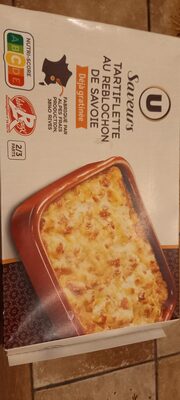
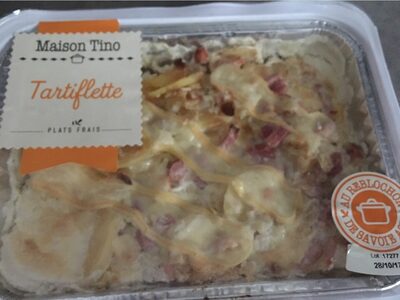
Nutrition per 100 g
| Nutrient | Tartiflette reblochon | Tartiflette |
|---|---|---|
| Nutri-Score | c | c |
| NOVA group | 4 | 4 |
| Calories | 160 kcal | 142 kcal |
| Fat | 9.8 g | 9.4 g |
| Saturated fat | 5.9 g | 5.7 g |
| Sugars | 0.8 g | 1.1 g |
| Salt | 0.7 g | 0.9 g |
| Fiber | 1.5 g | — |
| Protein | 6.7 g | 6 g |
| Additives | 0 | 7 |
| Allergens | Milk | Milk, Sulphur dioxide and sulphites |
Green = better value for that nutrient (less sugar, fat, salt and calories; more fiber and protein).
Key differences
- Tartiflette has 11% fewer calories (142 kcal vs 160 kcal).
- Tartiflette reblochon has 27% less sugar (0.8 g vs 1.1 g).
- Tartiflette reblochon has 10% more protein (6.7 g vs 6 g).
- Only Tartiflette lists: Sulphur dioxide and sulphites.
Ingredients
Tartiflette reblochon
Pomme de terre 52%, REBLOCHON de Savoie AOP* 20%, lardons cuits fumés 10% [poitrine de porc, sel, dextrose, arômes naturels, ferments. Fumage au bois de hêtre], oignons 6%, CRÈME fraîche, eau, fécule de pomme de terre, sel, poivre. *AOP : appellation d'origine protégée.
Tartiflette
Pommes de terre 44%, Reblochon de Savoie AOP 15% (colorant de croûte : rocou), crème 30% de matière grasse, lait écrémé, lardons fumés (poitrine de porc, eau, sel, sirop de glucose, acidifiants acétate de sodium et lactate de potassium, antioxydant : érythorbate de sodium, conservateur : nitrite de sodium), oignons, vin blanc, amidon modifié de maïs, sel, ail, poivre.
FAQ
Which is healthier: Tartiflette reblochon or Tartiflette?
Overall, Tartiflette reblochon has the better nutritional profile on the measures we compare. We compare Nutri-Score, processing level and seven nutrients per 100 g. Your own needs (for example low sugar or high protein) may make a different choice better for you.
Which has fewer calories?
Tartiflette has fewer calories: 142 kcal versus 160 kcal per 100 g.
Which has less sugar?
Tartiflette reblochon has less sugar: 0.8 g versus 1.1 g per 100 g.