
Super Smoothie Antioxydant vs Energise Super smoothie
Overall, Energise Super smoothie has the better nutritional profile on the measures we compare. It wins on 2 of our comparison points versus 0.
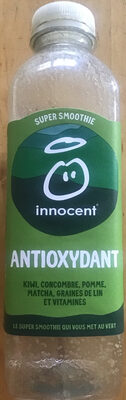
Super Smoothie Antioxydant
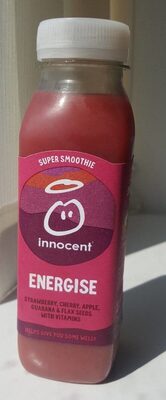
Energise Super smoothie
Nutrition per 100 ml
| Nutrient | Super Smoothie Antioxydant | Energise Super smoothie |
|---|---|---|
| Nutri-Score | d | — |
| NOVA group | 1 | 1 |
| Calories | 54 kcal | 53 kcal |
| Fat | 0.5 g | 0 g |
| Saturated fat | 0.1 g | 0.1 g |
| Sugars | 11 g | 10 g |
| Salt | 0.1 g | 0 g |
| Fiber | 1.1 g | 1.4 g |
| Protein | 0.5 g | 1.5 g |
| Additives | 0 | 0 |
| Allergens | Kiwi | Apple, Banana |
Green = better value for that nutrient (less sugar, fat, salt and calories; more fiber and protein).
Key differences
- Energise Super smoothie has no fat, while Super Smoothie Antioxydant has 0.5 g.
- Energise Super smoothie has 67% more protein (1.5 g vs 0.5 g).
- Only Super Smoothie Antioxydant lists: Kiwi.
- Only Energise Super smoothie lists: Apple, Banana.
Ingredients
Super Smoothie Antioxydant
pommes, banane, raisins blancs, mangue, kiwi (6 %), jus de concombre, extrait de spiruline, graines de lin (0,6 %), jus de citron vert (0,1 %), extrait de carthame, thé vert et matcha (0,05 %), vitamines (B1, B2, B3, B6, vitamine C, vitamine E)
Energise Super smoothie
apple (50%), red grapes, white grapes, banana, strawberries (10%), blackcurrants, cherries (3.3%), beetroot juice, milled flax seeds (0.56%), guarana (0.01%), vitamin B1, vitamin B2, vitamin B3, vitamin B6, vitamin C vitamin E.
FAQ
Which is healthier: Super Smoothie Antioxydant or Energise Super smoothie?
Overall, Energise Super smoothie has the better nutritional profile on the measures we compare. We compare Nutri-Score, processing level and seven nutrients per 100 g. Your own needs (for example low sugar or high protein) may make a different choice better for you.
Which has fewer calories?
Energise Super smoothie has fewer calories: 53 kcal versus 54 kcal per 100 g.
Which has less sugar?
Energise Super smoothie has less sugar: 10 g versus 11 g per 100 g.