
Strawberry Lemonade vs Friskis Zeroh! Jordbær & Appelsin
Overall, Friskis Zeroh! Jordbær & Appelsin has the better nutritional profile on the measures we compare. It wins on 4 of our comparison points versus 0.
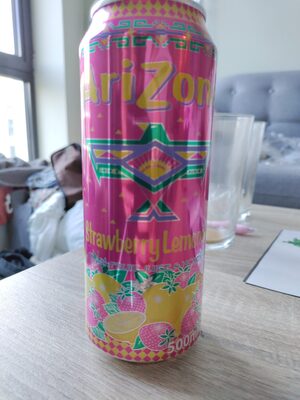
Nutrition per 100 ml
| Nutrient | Strawberry Lemonade | Friskis Zeroh! Jordbær & App... |
|---|---|---|
| Nutri-Score | d | b |
| NOVA group | 4 | 4 |
| Calories | 20 kcal | 9 kcal |
| Fat | 0 g | 0 g |
| Saturated fat | 0 g | 0 g |
| Sugars | 4.8 g | 0 g |
| Salt | 0 g | 0 g |
| Fiber | 0 g | — |
| Protein | 0 g | 0 g |
| Additives | 3 | 3 |
| Allergens | None listed | None listed |
Green = better value for that nutrient (less sugar, fat, salt and calories; more fiber and protein).
Key differences
- Friskis Zeroh! Jordbær & Appelsin has 55% fewer calories (9 kcal vs 20 kcal).
- Friskis Zeroh! Jordbær & Appelsin has no sugar, while Strawberry Lemonade has 4.8 g.
- Friskis Zeroh! Jordbær & Appelsin has the better Nutri-Score.
Ingredients
Strawberry Lemonade
Water, vruchtensap uit concentraat (citroen, peer), suiker, aardbei puree, honing (0,09%), voedingszuur: citroenzuur, kleurend levensmiddel: concentraat van wortel en bosbessen, natuurlijk aroma, zoetstof: steviolglycosiden uit stevia, antioxidant: ascorbinezuur.
Friskis Zeroh! Jordbær & Appelsin
Vann, surhetsregulerende middel (sitronsyre, trinatriumsitrat), naturlig aroma, søtstoff (sukralose, steviolglykosid**), konserveringsmiddel (aliumsorbat), naturlig farge (gulrot og fargetistel). stabilisator (akasiegummi), vegetabilsk olje (kokosnettolje). Ekstrakt fra planten Stevia rebaudiana.
FAQ
Which is healthier: Strawberry Lemonade or Friskis Zeroh! Jordbær & Appelsin?
Overall, Friskis Zeroh! Jordbær & Appelsin has the better nutritional profile on the measures we compare. We compare Nutri-Score, processing level and seven nutrients per 100 g. Your own needs (for example low sugar or high protein) may make a different choice better for you.
Which has fewer calories?
Friskis Zeroh! Jordbær & Appelsin has fewer calories: 9 kcal versus 20 kcal per 100 g.
Which has less sugar?
Friskis Zeroh! Jordbær & Appelsin has less sugar: 0 g versus 4.8 g per 100 g.