
Soupe à la chinoise vs Nudelsuppe Jin Ramen Mild Noodle Soup
Overall, Soupe à la chinoise has the better nutritional profile on the measures we compare. It wins on 5 of our comparison points versus 1.
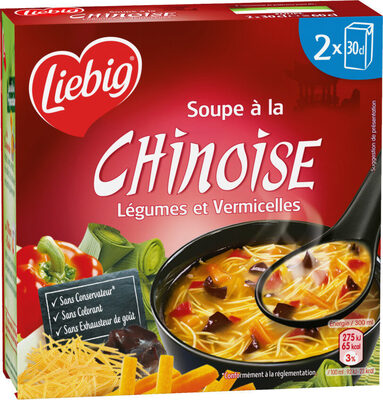
Soupe à la chinoise
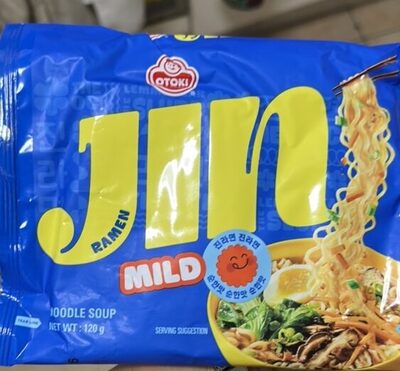
Nudelsuppe Jin Ramen Mild Noodle Soup
Nutrition per 100 g
| Nutrient | Soupe à la chinoise | Nudelsuppe Jin Ramen Mild No... |
|---|---|---|
| Nutri-Score | — | — |
| NOVA group | 4 | 4 |
| Calories | 21 kcal | 421 kcal |
| Fat | 0.3 g | 13.2 g |
| Saturated fat | 0.1 g | 7.1 g |
| Sugars | 0.9 g | 2.6 g |
| Salt | 0.8 g | 3.9 g |
| Fiber | 0.5 g | — |
| Protein | 0.6 g | 10.2 g |
| Additives | 2 | 14 |
| Allergens | Celery, Eggs, Gluten, Milk | Gluten, Soybeans |
Green = better value for that nutrient (less sugar, fat, salt and calories; more fiber and protein).
Key differences
- Soupe à la chinoise has 95% fewer calories (21 kcal vs 421 kcal).
- Soupe à la chinoise has 98% less fat (0.3 g vs 13.2 g).
- Soupe à la chinoise has 99% less saturated fat (0.1 g vs 7.1 g).
- Soupe à la chinoise has 65% less sugar (0.9 g vs 2.6 g).
- Soupe à la chinoise has 81% less salt (0.8 g vs 3.9 g).
- Nudelsuppe Jin Ramen Mild Noodle Soup has 94% more protein (10.2 g vs 0.6 g).
- Only Soupe à la chinoise lists: Celery, Eggs, Milk.
- Only Nudelsuppe Jin Ramen Mild Noodle Soup lists: Soybeans.
Ingredients
Soupe à la chinoise
Eau, légumes 15% (carotte oignon, céleri, poivron rouge, poireau), vermicelles cuits 5% (semoule de blé, blanc d'oeuf), champignons noirs 2,3%, amidon transformé de pomme de terre, arômes (contient céleri), sel, graisse de poule (antioxydant : extrait de romarin), piment de Cayenne, lait écrémé en poudre.
Nudelsuppe Jin Ramen Mild Noodle Soup
Noodles (89%) (Wheat flour 61%, modified starch (E1420), paim oil, Wheat gluten, salt, emulsified oil (oligosaccharide, soybean oil, antioxidant (E306 (soy)), emulsifiers (E322 (soy), E471)), yeast extract, acidity regulators (E450, E451, E500, E501), green tea extract, colour (E101)), Soup powder (9.2%) (Salt, sugar, red pepper, seasoning, powderized peccer, garlic, salt, soy sauce, yeast extract, red pepper paste, soybean paste, flavour enhancers (E621, E631, E627), yeast seasoning powder (salt, dextrin, yeast extract), hydrolyzed vegetable protein (soybean, wheat), soy sauce seasoning powder (soy sauce, onion, yeast extract, glucose), soy sauce powder (soybean, wheat), garlic powder, red pepper, palm oil powder (palm oil, starch syrup, dextrin), glucose, black pepper, maltodextrin, kelp extract powder (kelp, salt, glucose), chilli extract, yeast extract powder), Dehydrated vegetable mix (1.8%) (Chinese cabbage, textured vegetable protein (soy, wheat), carrot, green onion, mushroom, seaweed
FAQ
Which is healthier: Soupe à la chinoise or Nudelsuppe Jin Ramen Mild Noodle Soup?
Overall, Soupe à la chinoise has the better nutritional profile on the measures we compare. We compare Nutri-Score, processing level and seven nutrients per 100 g. Your own needs (for example low sugar or high protein) may make a different choice better for you.
Which has fewer calories?
Soupe à la chinoise has fewer calories: 21 kcal versus 421 kcal per 100 g.
Which has less sugar?
Soupe à la chinoise has less sugar: 0.9 g versus 2.6 g per 100 g.