
Sauce samouraï vs Samourai
Overall, Samourai has the better nutritional profile on the measures we compare. It wins on 4 of our comparison points versus 2.
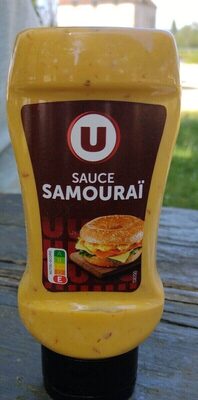
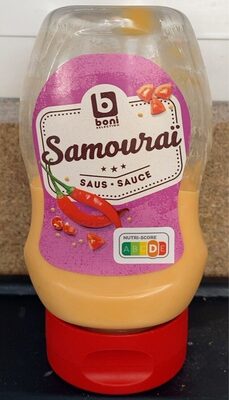
Nutrition per 100 g
| Nutrient | Sauce samouraï | Samourai |
|---|---|---|
| Nutri-Score | e | d |
| NOVA group | 4 | 4 |
| Calories | 617 kcal | 715 kcal |
| Fat | 65 g | 79 g |
| Saturated fat | 5.4 g | 4.6 g |
| Sugars | 4.2 g | 0.5 g |
| Salt | 1.8 g | 1.8 g |
| Fiber | 0.5 g | — |
| Protein | 1.3 g | 1.2 g |
| Additives | 5 | 3 |
| Allergens | Eggs, Mustard | Eggs, Mustard |
Green = better value for that nutrient (less sugar, fat, salt and calories; more fiber and protein).
Key differences
- Sauce samouraï has 14% fewer calories (617 kcal vs 715 kcal).
- Sauce samouraï has 18% less fat (65 g vs 79 g).
- Samourai has 15% less saturated fat (4.6 g vs 5.4 g).
- Samourai has 88% less sugar (0.5 g vs 4.2 g).
- Samourai has the better Nutri-Score.
Ingredients
Sauce samouraï
Huile de colza, eau, jaune d'OEUF, vinaigre d'alcool, sucre, sel, MOUTARDE de dijon (eau, graines de MOUTARDE, vinaigre d'alcool, sel, acidifiant : acide citrique), poivron 0,8%, amidon de maïs, épices (contient MOUTARDE), piment 0,3%, extrait d'épices, colorants : lutéine et extrait de paprika, épaississants : gomme guar et gomme xanthane, arôme naturel d'ail.
Samourai
pepper emulsified sauce - 76,6% rapeseed oil, water, egg yolks, 2,5% extracts (60% chillies, mustard, cloves), vinegar, eufs yolks powder, salt, 1% mustard, 0,7% tomato concentrate, acidifier (e330), extracts (green tea, rosemary), antioxidant (e385), paprika flavour, colour (e160c),
FAQ
Which is healthier: Sauce samouraï or Samourai?
Overall, Samourai has the better nutritional profile on the measures we compare. We compare Nutri-Score, processing level and seven nutrients per 100 g. Your own needs (for example low sugar or high protein) may make a different choice better for you.
Which has fewer calories?
Sauce samouraï has fewer calories: 617 kcal versus 715 kcal per 100 g.
Which has less sugar?
Samourai has less sugar: 0.5 g versus 4.2 g per 100 g.