
Salmas Clásicas vs Zero Chip Choco
Overall, Salmas Clásicas has the better nutritional profile on the measures we compare. It wins on 7 of our comparison points versus 2.
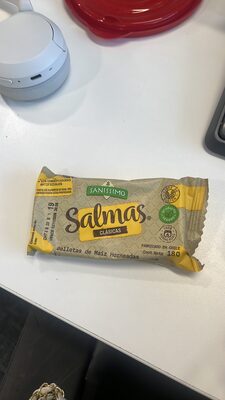
Salmas Clásicas

Zero Chip Choco
Nutrition per 100 g
| Nutrient | Salmas Clásicas | Zero Chip Choco |
|---|---|---|
| Nutri-Score | c | d |
| NOVA group | 3 | 4 |
| Calories | 395 kcal | 454 kcal |
| Fat | 4.7 g | 24 g |
| Saturated fat | 0.9 g | 6 g |
| Sugars | 0.9 g | 0.5 g |
| Salt | 0.8 g | 0.6 g |
| Fiber | 0 g | 4 g |
| Protein | 7.9 g | 6 g |
| Additives | 3 | 6 |
| Allergens | None listed | Gluten, Soybeans |
Green = better value for that nutrient (less sugar, fat, salt and calories; more fiber and protein).
Key differences
- Salmas Clásicas has 13% fewer calories (395 kcal vs 454 kcal).
- Salmas Clásicas has 80% less fat (4.7 g vs 24 g).
- Salmas Clásicas has 85% less saturated fat (0.9 g vs 6 g).
- Zero Chip Choco has 44% less sugar (0.5 g vs 0.9 g).
- Zero Chip Choco has 100% more fiber (4 g vs 0 g).
- Salmas Clásicas has 24% more protein (7.9 g vs 6 g).
- Salmas Clásicas has the better Nutri-Score.
- Salmas Clásicas is less processed (lower NOVA group).
- Only Zero Chip Choco lists: Gluten, Soybeans.
Ingredients
Salmas Clásicas
Harina de maíz nixtamalizada, sal de mar, regulador de acidez (hidróxido de calcio), antioxidante (tocoferol concentrado), mezcla de tocoferoles.
Zero Chip Choco
Harina de trigo, azúcar, aceite de girasol, jarabe de glucosa y fructosa, cacao en polvo, gasificantes (bicarbonato sódico, bicarbonato amónico), sal, emulgente (lecitina de soja), aroma,
FAQ
Which is healthier: Salmas Clásicas or Zero Chip Choco?
Overall, Salmas Clásicas has the better nutritional profile on the measures we compare. We compare Nutri-Score, processing level and seven nutrients per 100 g. Your own needs (for example low sugar or high protein) may make a different choice better for you.
Which has fewer calories?
Salmas Clásicas has fewer calories: 395 kcal versus 454 kcal per 100 g.
Which has less sugar?
Zero Chip Choco has less sugar: 0.5 g versus 0.9 g per 100 g.