
Rôti de Poulet cuit - Halal vs Délice de Dinde fumé
Overall, Rôti de Poulet cuit - Halal has the better nutritional profile on the measures we compare. It wins on 2 of our comparison points versus 1.
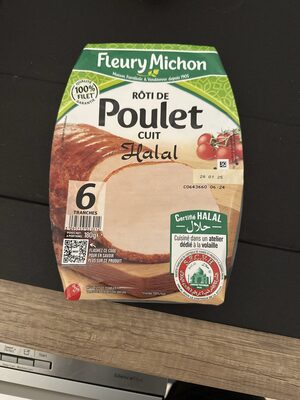
Rôti de Poulet cuit - Halal
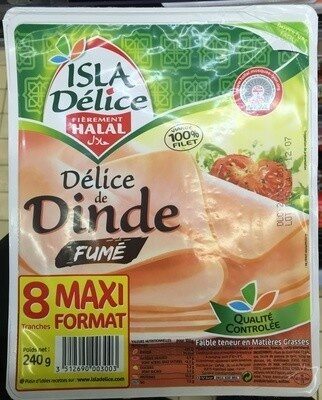
Délice de Dinde fumé
Nutrition per 100 g
| Nutrient | Rôti de Poulet cuit - Halal | Délice de Dinde fumé |
|---|---|---|
| Nutri-Score | — | d |
| NOVA group | 4 | 4 |
| Calories | 101 kcal | 98 kcal |
| Fat | 2.1 g | 0.9 g |
| Saturated fat | 0.5 g | 0.5 g |
| Sugars | 0.5 g | 3.3 g |
| Salt | 1.7 g | 3.5 g |
| Fiber | 0 g | 0.1 g |
| Protein | 20 g | 18.8 g |
| Additives | 2 | 6 |
| Allergens | Celery | Soybeans |
Green = better value for that nutrient (less sugar, fat, salt and calories; more fiber and protein).
Key differences
- Délice de Dinde fumé has 57% less fat (0.9 g vs 2.1 g).
- Rôti de Poulet cuit - Halal has 85% less sugar (0.5 g vs 3.3 g).
- Rôti de Poulet cuit - Halal has 50% less salt (1.7 g vs 3.5 g).
- Only Rôti de Poulet cuit - Halal lists: Celery.
- Only Délice de Dinde fumé lists: Soybeans.
Ingredients
Rôti de Poulet cuit - Halal
Filet de poulet 97%, sel, concentrés de betterave et _céleri_, dextrose de maïs, extrait de levure, ail 0.1%, ferments, antioxydant : ascorbate de sodium, colorant : caramel ordinaire.
Délice de Dinde fumé
Filets de dinde halal (72,6%), eau, fécule de pomme de terre, sirop de glucose, sel, stabilisants (E450, E451), protéines de soja, antioxydants (E316, E331), conservateurs (E262, E250), arômes naturels, extrait d'épices, arôme fumé.
FAQ
Which is healthier: Rôti de Poulet cuit - Halal or Délice de Dinde fumé?
Overall, Rôti de Poulet cuit - Halal has the better nutritional profile on the measures we compare. We compare Nutri-Score, processing level and seven nutrients per 100 g. Your own needs (for example low sugar or high protein) may make a different choice better for you.
Which has fewer calories?
Délice de Dinde fumé has fewer calories: 98 kcal versus 101 kcal per 100 g.
Which has less sugar?
Rôti de Poulet cuit - Halal has less sugar: 0.5 g versus 3.3 g per 100 g.