
Latte Espresso vs Kopiko twin (bwn) 40g brown
Overall, Latte Espresso has the better nutritional profile on the measures we compare. It wins on 9 of our comparison points versus 0.
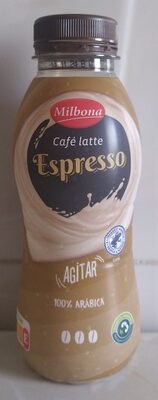
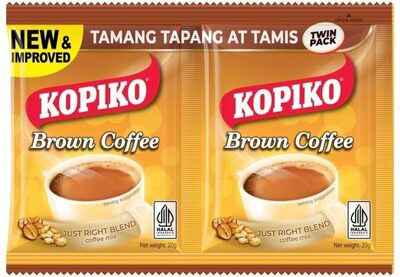
Nutrition per 100 g
| Nutrient | Latte Espresso | Kopiko twin (bwn) 40g brown |
|---|---|---|
| Nutri-Score | c | e |
| NOVA group | 4 | 4 |
| Calories | 56 kcal | 110 kcal |
| Fat | 1.2 g | 3 g |
| Saturated fat | 0.8 g | 3 g |
| Sugars | 8.2 g | 20 g |
| Salt | 0.2 g | 1.1 g |
| Fiber | 3.5 g | 0 g |
| Protein | 3 g | 1 g |
| Additives | 1 | 10 |
| Allergens | Milk, Milch | Milk, Sodium caseinate |
Green = better value for that nutrient (less sugar, fat, salt and calories; more fiber and protein).
Key differences
- Latte Espresso has 49% fewer calories (56 kcal vs 110 kcal).
- Latte Espresso has 60% less fat (1.2 g vs 3 g).
- Latte Espresso has 73% less saturated fat (0.8 g vs 3 g).
- Latte Espresso has 59% less sugar (8.2 g vs 20 g).
- Latte Espresso has 84% less salt (0.2 g vs 1.1 g).
- Latte Espresso has 100% more fiber (3.5 g vs 0 g).
- Latte Espresso has 67% more protein (3 g vs 1 g).
- Latte Espresso has the better Nutri-Score.
- Only Latte Espresso lists: Milch.
- Only Kopiko twin (bwn) 40g brown lists: Sodium caseinate.
Ingredients
Latte Espresso
77% fettarme _Milch_, 18% Arabica-Kaffee, Zucker, Stabilisatoren: Natriumcarbonate, Carrageen,
Kopiko twin (bwn) 40g brown
Non-dairy creamer, glucose syrup, fully hydrogenated vegetable fat (palm kernel oil), sodium caseinate, stabilizer (dipotassium phosphate, sodium polyphosphate), emulsifier (mono - and di-glycerides of fatty acids, sodium stearoyl-2-lactylate), salt, anticaking agent (silicon dioxide), sugar, instant coffee, foaming creamer glucose syrup solids, milk solids, malt extract powder, skim milk powder, brown sugar, cocoa powder, artificial flavor, caramel color 150d (artificial), sweeteners (acesulfame-K, sucralose).
FAQ
Which is healthier: Latte Espresso or Kopiko twin (bwn) 40g brown?
Overall, Latte Espresso has the better nutritional profile on the measures we compare. We compare Nutri-Score, processing level and seven nutrients per 100 g. Your own needs (for example low sugar or high protein) may make a different choice better for you.
Which has fewer calories?
Latte Espresso has fewer calories: 56 kcal versus 110 kcal per 100 g.
Which has less sugar?
Latte Espresso has less sugar: 8.2 g versus 20 g per 100 g.