
Hühnerbrühe vs Rinderbrühe
Overall, Rinderbrühe has the better nutritional profile on the measures we compare. It wins on 3 of our comparison points versus 1.
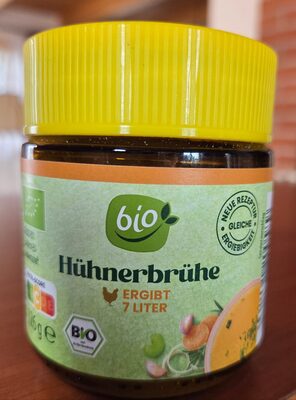
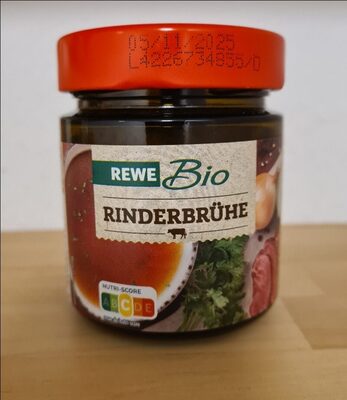
Nutrition per 100 g
| Nutrient | Hühnerbrühe | Rinderbrühe |
|---|---|---|
| Nutri-Score | — | — |
| NOVA group | — | 4 |
| Calories | 40 kcal | 10 kcal |
| Fat | 1 g | 0.5 g |
| Saturated fat | — | 0.1 g |
| Sugars | 5 g | 0.5 g |
| Salt | — | 1.1 g |
| Fiber | — | 0.5 g |
| Protein | 1 g | 0.5 g |
| Additives | 0 | 0 |
| Allergens | Soybeans | None listed |
Green = better value for that nutrient (less sugar, fat, salt and calories; more fiber and protein).
Key differences
- Rinderbrühe has 76% fewer calories (10 kcal vs 40 kcal).
- Rinderbrühe has 48% less fat (0.5 g vs 1 g).
- Rinderbrühe has 90% less sugar (0.5 g vs 5 g).
- Hühnerbrühe has 48% more protein (1 g vs 0.5 g).
- Only Hühnerbrühe lists: Soybeans.
Ingredients
Hühnerbrühe
Bio-Hühnerbrühe Zutaten: Meersalz, Glukosesirup", Rohrohrzucker", Stärke, Hühner fleischpulver 6,3 %, Gemüse" (Zwiebelpulver 0,8 %), Sellerie 0,3% Karotten 0,1 %), Hühnerfett 1,1 %), Curcuma", Kräuter" (Petersilie Rosmarin"), Knoblauch 0,1 %), Säuerungsmittel (Citronensäure). "Aus kontrolliert biologischer Erzeugung. Kann Spuren von glutenhaltigem Getreide, Ei, Soja, Milch und Senf enthalten. Zubereitung: 9 g (ca. 2 gestrichene Teelöffel) in 21 sprudelnd kochendem Wasser auflösen. Bei Raumtemperatur, trocken und lichtgeschützt lagern. Gefäß stets gut verschließen. Mindestens haltbar bis: siehe Deckel. 126 ge
Rinderbrühe
Jodiertes Speisesalz (Speisesalz, Kaliumjodid), Zucker, Maltodextrin, Rindfleischextrakt 3,5%, Stärke, Karamellzucker, Zwiebel, Sonnenblumenöl, Gewürze, Kräuter
FAQ
Which is healthier: Hühnerbrühe or Rinderbrühe?
Overall, Rinderbrühe has the better nutritional profile on the measures we compare. We compare Nutri-Score, processing level and seven nutrients per 100 g. Your own needs (for example low sugar or high protein) may make a different choice better for you.
Which has fewer calories?
Rinderbrühe has fewer calories: 10 kcal versus 40 kcal per 100 g.
Which has less sugar?
Rinderbrühe has less sugar: 0.5 g versus 5 g per 100 g.