
Gold Non-Dairy Coconut Latte Instant Coffee x 6 Sachets vs Nescafé Gold Oat Latte
Neither product is clearly better overall — it depends on what matters most to you.
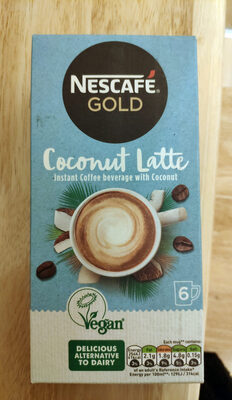
Gold Non-Dairy Coconut Latte Instant Coffee x 6 Sachets
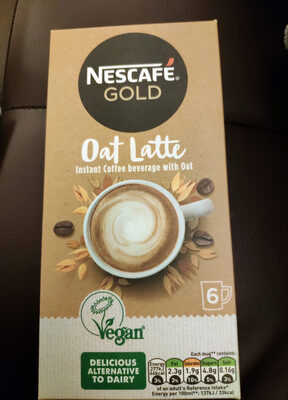
Nescafé Gold Oat Latte
Nutrition per 100 g
| Nutrient | Gold Non-Dairy Coconut Latte... | Nescafé Gold Oat Latte |
|---|---|---|
| Nutri-Score | c | c |
| NOVA group | 4 | 4 |
| Calories | 31 kcal | 33 kcal |
| Fat | 1.1 g | 1.1 g |
| Saturated fat | 0.9 g | 1 g |
| Sugars | 2.4 g | 2.4 g |
| Salt | 0.1 g | 0.1 g |
| Fiber | 0.4 g | 0.4 g |
| Protein | 0.2 g | 0.3 g |
| Additives | 8 | 7 |
| Allergens | None listed | Gluten |
Green = better value for that nutrient (less sugar, fat, salt and calories; more fiber and protein).
Key differences
- Only Nescafé Gold Oat Latte lists: Gluten.
Ingredients
Gold Non-Dairy Coconut Latte Instant Coffee x 6 Sachets
glucose syrup, sugar, soluble coffee 15%, coconut oil, rice flour, coconut cream 2,7% (coconut milk, emulsifier e1450), anti-caking agent (calcium carbonate), hydrolysed rice protein, acidity regulators (sodium bicarbonate, citric acid), natural flavourings, salt, emulsifier (sunflower lecithin),
Nescafé Gold Oat Latte
Glucose Syrup, Sugar, Coconut Oil, Soluble Coffee 12%, Rice Flour, _Oat_ Flour 4%, Anti - caking Agent (Calcium Carbonate), Hydrolysed Rice Protein, Acidity Regulators (Sodium Bicarbonate, Citric Acid), Salt, Emulsifier (Sunflower Lecithin).
FAQ
Which is healthier: Gold Non-Dairy Coconut Latte Instant Coffee x 6 Sachets or Nescafé Gold Oat Latte?
Neither product is clearly better overall — it depends on what matters most to you. We compare Nutri-Score, processing level and seven nutrients per 100 g. Your own needs (for example low sugar or high protein) may make a different choice better for you.
Which has fewer calories?
Gold Non-Dairy Coconut Latte Instant Coffee x 6 Sachets has fewer calories: 31 kcal versus 33 kcal per 100 g.
Which has less sugar?
Gold Non-Dairy Coconut Latte Instant Coffee x 6 Sachets has less sugar: 2.4 g versus 2.4 g per 100 g.