
Frankfurters vs Frankfurt original
Overall, Frankfurt original has the better nutritional profile on the measures we compare. It wins on 6 of our comparison points versus 2.

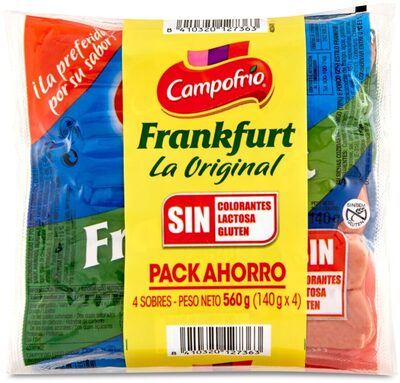
Nutrition per 100 g
| Nutrient | Frankfurters | Frankfurt original |
|---|---|---|
| Nutri-Score | e | d |
| NOVA group | 4 | 4 |
| Calories | 280 kcal | 141 kcal |
| Fat | 25.1 g | 15 g |
| Saturated fat | 11.1 g | 5 g |
| Sugars | 1.1 g | 1.3 g |
| Salt | 1.7 g | 2.5 g |
| Fiber | 1.4 g | 0 g |
| Protein | 11.1 g | 13 g |
| Additives | 3 | 4 |
| Allergens | Pork | Milk |
Green = better value for that nutrient (less sugar, fat, salt and calories; more fiber and protein).
Key differences
- Frankfurt original has 49% fewer calories (141 kcal vs 280 kcal).
- Frankfurt original has 40% less fat (15 g vs 25.1 g).
- Frankfurt original has 55% less saturated fat (5 g vs 11.1 g).
- Frankfurters has 32% less salt (1.7 g vs 2.5 g).
- Frankfurters has 100% more fiber (1.4 g vs 0 g).
- Frankfurt original has 14% more protein (13 g vs 11.1 g).
- Frankfurt original has the better Nutri-Score.
- Only Frankfurters lists: Pork.
- Only Frankfurt original lists: Milk.
Ingredients
Frankfurters
pork 75%, water, bacon, nitrite curing salt (salt, preservative (sodium nitrite)), spices, dextrose, spice extracts, stabiliser (diphosphates), antioxidant (ascorbic acid),
Frankfurt original
Carne separada mecánicamente de pollo, grasa de cerdo, agua, sal, dextrosa, almidón, estabilizantes (e-466, e-451), especias y aromas, antioxidante (e-316), aroma de humo, conservador (e-250), recubrimiento: colágeno, puede contener trazas de soja y proteínas de la leche,
FAQ
Which is healthier: Frankfurters or Frankfurt original?
Overall, Frankfurt original has the better nutritional profile on the measures we compare. We compare Nutri-Score, processing level and seven nutrients per 100 g. Your own needs (for example low sugar or high protein) may make a different choice better for you.
Which has fewer calories?
Frankfurt original has fewer calories: 141 kcal versus 280 kcal per 100 g.
Which has less sugar?
Frankfurters has less sugar: 1.1 g versus 1.3 g per 100 g.