
Brioche tranchée BIO vs Gache tranchee rectangle 450g
Overall, Gache tranchee rectangle 450g has the better nutritional profile on the measures we compare. It wins on 3 of our comparison points versus 2.
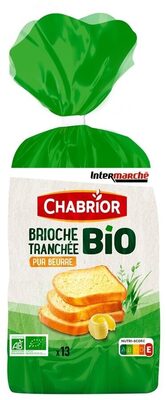
Brioche tranchée BIO
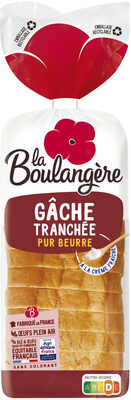
Gache tranchee rectangle 450g
Nutrition per 100 g
| Nutrient | Brioche tranchée BIO | Gache tranchee rectangle 450... |
|---|---|---|
| Nutri-Score | e | d |
| NOVA group | 3 | 4 |
| Calories | 358 kcal | 341 kcal |
| Fat | 12.7 g | 12 g |
| Saturated fat | 8.4 g | 7.9 g |
| Sugars | 10.5 g | 15 g |
| Salt | 1.1 g | 1 g |
| Fiber | 2.8 g | 3.9 g |
| Protein | 8.8 g | 8.4 g |
| Additives | 0 | 0 |
| Allergens | Eggs, Gluten, Milk | Eggs, Gluten, Milk |
Green = better value for that nutrient (less sugar, fat, salt and calories; more fiber and protein).
Key differences
- Brioche tranchée BIO has 30% less sugar (10.5 g vs 15 g).
- Gache tranchee rectangle 450g has 28% more fiber (3.9 g vs 2.8 g).
- Gache tranchee rectangle 450g has the better Nutri-Score.
- Brioche tranchée BIO is less processed (lower NOVA group).
Ingredients
Brioche tranchée BIO
Farine de blé** 49%, œufs frais** 15%, sucre de canne roux** 12%, beurre** 12% (dont lait), levain (farine de blé**, eau), rhum**, levure, sel marin non raffiné, eau de fleur d'oranger**, infusion de vanille**.**Issus de l'agriculture biologique
Gache tranchee rectangle 450g
Farine de BLÉ* 52%, sucre, ŒUFS*/** entiers frais 14%, BEURRE 10.5%, CRÈME fraîche 5.1%, GLUTEN DE BLÉ, sel, arôme naturel de vanille (contient alcool), levure, levure désactivée, jus d'acérola déshydraté. *Ingrédients issus du commerce équitable français. **Œufs de poules élevées en plein air.
FAQ
Which is healthier: Brioche tranchée BIO or Gache tranchee rectangle 450g?
Overall, Gache tranchee rectangle 450g has the better nutritional profile on the measures we compare. We compare Nutri-Score, processing level and seven nutrients per 100 g. Your own needs (for example low sugar or high protein) may make a different choice better for you.
Which has fewer calories?
Gache tranchee rectangle 450g has fewer calories: 341 kcal versus 358 kcal per 100 g.
Which has less sugar?
Brioche tranchée BIO has less sugar: 10.5 g versus 15 g per 100 g.