
Apfelschorle vs Schorle
Overall, Apfelschorle has the better nutritional profile on the measures we compare. It wins on 6 of our comparison points versus 1.
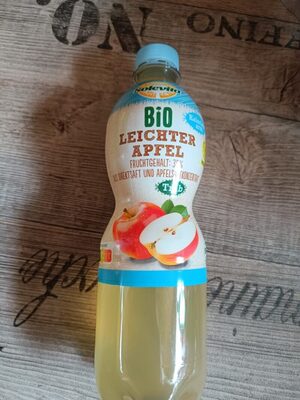
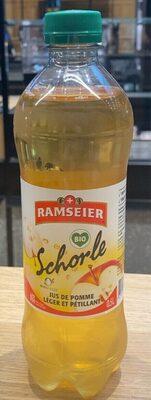
Nutrition per 100 g
| Nutrient | Apfelschorle | Schorle |
|---|---|---|
| Nutri-Score | c | d |
| NOVA group | — | 4 |
| Calories | 16 kcal | 27 kcal |
| Fat | 0 g | 0.5 g |
| Saturated fat | 0 g | 0 g |
| Sugars | 3.7 g | 6.7 g |
| Salt | 0 g | 0.5 g |
| Fiber | 0.1 g | — |
| Protein | 0 g | 0.5 g |
| Additives | 1 | 1 |
| Allergens | None listed | None listed |
Green = better value for that nutrient (less sugar, fat, salt and calories; more fiber and protein).
Key differences
- Apfelschorle has 41% fewer calories (16 kcal vs 27 kcal).
- Apfelschorle has no fat, while Schorle has 0.5 g.
- Apfelschorle has 45% less sugar (3.7 g vs 6.7 g).
- Apfelschorle has no salt, while Schorle has 0.5 g.
- Schorle has 100% more protein (0.5 g vs 0 g).
- Apfelschorle has the better Nutri-Score.
Ingredients
Apfelschorle
organic apple fruit juice drink made from directly pressed apple juice and apple juice concentrate, carbonated, fruit content: 35% ingredients: water, 20% apple juice, 15% apple juice from apple juice concentrate natural apple flavouring, antioxidant: ascorbic acid, carbon ccl/ho ri acid, from controlled organic farming, **without lid and label protect from heat and light, after opening, store refrigerated and upright and consume within 2-3 days, unopened best before: see imprint page,
Schorle
Schweizer Bio-Apfelsaft (60%) (mit max. 10% Schweizer Bio-Birnensaft) aus Konzentrat, Wasser, Kohlensäure. Pasteurisiert. Vegan.
FAQ
Which is healthier: Apfelschorle or Schorle?
Overall, Apfelschorle has the better nutritional profile on the measures we compare. We compare Nutri-Score, processing level and seven nutrients per 100 g. Your own needs (for example low sugar or high protein) may make a different choice better for you.
Which has fewer calories?
Apfelschorle has fewer calories: 16 kcal versus 27 kcal per 100 g.
Which has less sugar?
Apfelschorle has less sugar: 3.7 g versus 6.7 g per 100 g.