
Veiselihamaitselised Nuudlid vs Ramen Carne
Overall, Veiselihamaitselised Nuudlid has the better nutritional profile on the measures we compare. It wins on 2 of our comparison points versus 1.

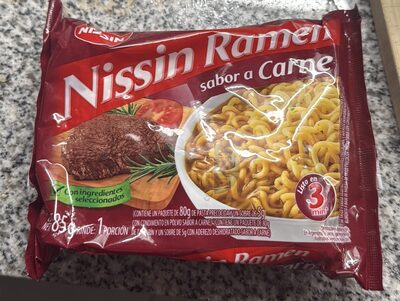
Nutrition per 100 g
| Nutrient | Veiselihamaitselised Nuudlid | Ramen Carne |
|---|---|---|
| Nutri-Score | e | — |
| NOVA group | — | 4 |
| Calories | 443 kcal | 452 kcal |
| Fat | 17 g | 17.7 g |
| Saturated fat | 1.2 g | 8.2 g |
| Sugars | 1.4 g | 1.5 g |
| Salt | 5.5 g | 3.7 g |
| Fiber | 2.5 g | 1.9 g |
| Protein | 10 g | 9.7 g |
| Additives | 0 | 17 |
| Allergens | None listed | Gluten, Milk, Soybeans |
Green = better value for that nutrient (less sugar, fat, salt and calories; more fiber and protein).
Key differences
- Veiselihamaitselised Nuudlid has 85% less saturated fat (1.2 g vs 8.2 g).
- Ramen Carne has 33% less salt (3.7 g vs 5.5 g).
- Veiselihamaitselised Nuudlid has 25% more fiber (2.5 g vs 1.9 g).
- Only Ramen Carne lists: Gluten, Milk, Soybeans.
Ingredients
Veiselihamaitselised Nuudlid
Not available.
Ramen Carne
Pasta precocida [Harina de trigo enriquecida, grasa vegetal, sal, reguladores de acidez (INS 501i, INS500i), estabilizantes (INS 451i, INS 450iii, INS 339i), colorante sintético idéntico al natural beta-caroteno (INS 160ai)], Condimento sabor a carne [resaltadores de sabor (INS 621, INS 631, INS 627), colorante (caramelo III INS 150c), aromatizantes, antihumectante (INS 551)], cebolla en polvo, carne bovino en polvo, perejil en trozos, cacao en polvo, antihumectante (INS 551).
FAQ
Which is healthier: Veiselihamaitselised Nuudlid or Ramen Carne?
Overall, Veiselihamaitselised Nuudlid has the better nutritional profile on the measures we compare. We compare Nutri-Score, processing level and seven nutrients per 100 g. Your own needs (for example low sugar or high protein) may make a different choice better for you.
Which has fewer calories?
Veiselihamaitselised Nuudlid has fewer calories: 443 kcal versus 452 kcal per 100 g.
Which has less sugar?
Veiselihamaitselised Nuudlid has less sugar: 1.4 g versus 1.5 g per 100 g.