
Timings & co vs Milo
Overall, Milo has the better nutritional profile on the measures we compare. It wins on 5 of our comparison points versus 2.
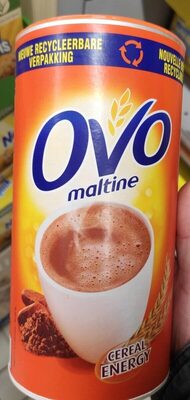
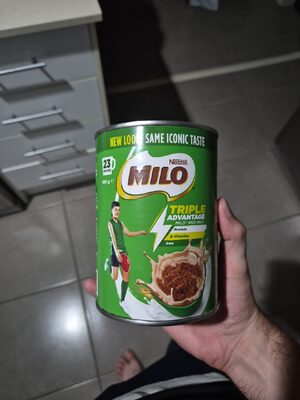
Nutrition per 100 g
| Nutrient | Timings & co | Milo |
|---|---|---|
| Nutri-Score | — | — |
| NOVA group | 4 | 3 |
| Calories | 376 kcal | 400 kcal |
| Fat | 1.9 g | 12.3 g |
| Saturated fat | 0.9 g | 8.4 g |
| Sugars | 51.1 g | 43.6 g |
| Salt | 0.5 g | 0 g |
| Fiber | 0 g | 4.1 g |
| Protein | 9.5 g | 12.3 g |
| Additives | 0 | 0 |
| Allergens | Gluten, Milk | Milk, Soybeans |
Green = better value for that nutrient (less sugar, fat, salt and calories; more fiber and protein).
Key differences
- Timings & co has 85% less fat (1.9 g vs 12.3 g).
- Timings & co has 89% less saturated fat (0.9 g vs 8.4 g).
- Milo has 15% less sugar (43.6 g vs 51.1 g).
- Milo has no salt, while Timings & co has 0.5 g.
- Milo has 100% more fiber (4.1 g vs 0 g).
- Milo has 23% more protein (12.3 g vs 9.5 g).
- Milo is less processed (lower NOVA group).
- Only Timings & co lists: Gluten.
- Only Milo lists: Soybeans.
Ingredients
Timings & co
Extrait de malt d'orge 51%, lait écrémé concentré (lait), lactosérum concentré, cacao maigre en poudre 13%, sucre, fructose, minéraux (carbonate de magnésium, phosphate de calcium), huile de colza, vitamines (E, C, thiamine : B1, riboflavine : B2, niacine : PP, B6, acide folique : B9, B12, biotine : B8, acide pantothénique B5), sel, arôme (vanilline).
Milo
Extract of Malt Barley or Malt Barley and Rice (Total Extract 38%), Milk Solids, Sugar, Cocoa, Choc Malt Blend (Soy), Minerals (Calcium, Iron), Vitamins (C, B3, B6, B2, D, B12)
FAQ
Which is healthier: Timings & co or Milo?
Overall, Milo has the better nutritional profile on the measures we compare. We compare Nutri-Score, processing level and seven nutrients per 100 g. Your own needs (for example low sugar or high protein) may make a different choice better for you.
Which has fewer calories?
Timings & co has fewer calories: 376 kcal versus 400 kcal per 100 g.
Which has less sugar?
Milo has less sugar: 43.6 g versus 51.1 g per 100 g.