
Saveurs d'Italie vs Scheibletten Toast
Neither product is clearly better overall — it depends on what matters most to you.

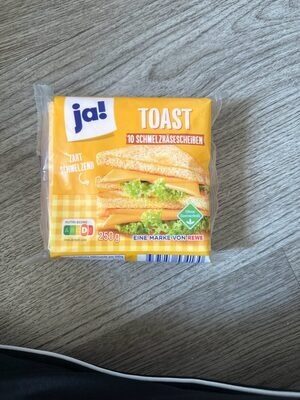
Nutrition per 100 g
| Nutrient | Saveurs d'Italie | Scheibletten Toast |
|---|---|---|
| Nutri-Score | d | e |
| NOVA group | 4 | 4 |
| Calories | 327 kcal | 230 kcal |
| Fat | 31 g | 16 g |
| Saturated fat | 22 g | 10.8 g |
| Sugars | 3 g | 6 g |
| Salt | 1.3 g | 7.8 g |
| Protein | 9 g | 15.7 g |
| Additives | 1 | 2 |
| Allergens | Milk | Milk |
Green = better value for that nutrient (less sugar, fat, salt and calories; more fiber and protein).
Key differences
- Scheibletten Toast has 30% fewer calories (230 kcal vs 327 kcal).
- Scheibletten Toast has 48% less fat (16 g vs 31 g).
- Scheibletten Toast has 51% less saturated fat (10.8 g vs 22 g).
- Saveurs d'Italie has 50% less sugar (3 g vs 6 g).
- Saveurs d'Italie has 83% less salt (1.3 g vs 7.8 g).
- Scheibletten Toast has 43% more protein (15.7 g vs 9 g).
- Saveurs d'Italie has the better Nutri-Score.
Ingredients
Saveurs d'Italie
Ingrédients du fromage : Lait et crème de lait (Origine : France), sel, ferments lactiques. Ingrédients des épices et aromates (en quantité variable) : poivron rouge, oignon, origan, basilic, ail, tomate, persil, poivre, olive verte (sel, huile d'olive, antioxydant : extrait de romarin), huile de tournesol, arômes. Produit fabriqué dans un atelier utilisant du poisson.
Scheibletten Toast
Köse 50%, Süßmolke, Butter, Süßmolkenpulver, Schmelzsalze (Natriumphosphate, Polyphosphate, Natriumcitrate), Speisesalz, Milcheiweiß, Farbstoff (Paprikaextrakt).
FAQ
Which is healthier: Saveurs d'Italie or Scheibletten Toast?
Neither product is clearly better overall — it depends on what matters most to you. We compare Nutri-Score, processing level and seven nutrients per 100 g. Your own needs (for example low sugar or high protein) may make a different choice better for you.
Which has fewer calories?
Scheibletten Toast has fewer calories: 230 kcal versus 327 kcal per 100 g.
Which has less sugar?
Saveurs d'Italie has less sugar: 3 g versus 6 g per 100 g.