
Propel Fitness Water vs Solti
Overall, Propel Fitness Water has the better nutritional profile on the measures we compare. It wins on 4 of our comparison points versus 0.
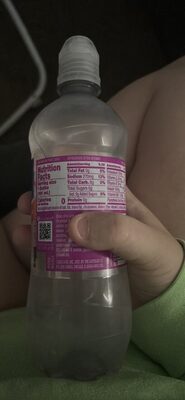
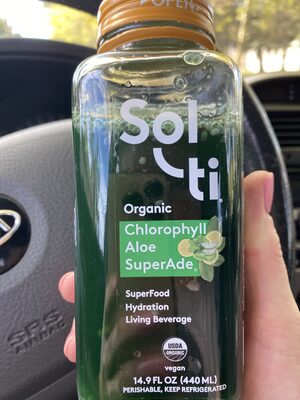
Nutrition per 100 g
| Nutrient | Propel Fitness Water | Solti |
|---|---|---|
| Nutri-Score | a | e |
| NOVA group | 4 | — |
| Calories | 0 kcal | 40 kcal |
| Fat | 0 g | 0 g |
| Saturated fat | — | 0 g |
| Sugars | 0 g | 8 g |
| Salt | 0.1 g | — |
| Fiber | — | 0 g |
| Protein | 0 g | 0 g |
| Additives | 7 | 0 |
| Allergens | None listed | None listed |
Green = better value for that nutrient (less sugar, fat, salt and calories; more fiber and protein).
Key differences
- Propel Fitness Water has no calories, while Solti has 40 kcal.
- Propel Fitness Water has no sugar, while Solti has 8 g.
- Propel Fitness Water has the better Nutri-Score.
Ingredients
Propel Fitness Water
WATER, CITRIC ACID, SODIUM HEXAMETAPHOSPHATE, NATURAL FLAVOR, SALT, POTASSIUM SORBATE, POTASSIUM CITRATE, SODIUM CITRATE, ASCORBIC ACID (VITAMIN C), SUCRALOSE, ACESULFAME POTASSIUM, CALCIUM DISODIUM EDTA, CALCIUM PANTOTHENATE (VITAMIN B5), NIACINAMIDE (VITAMIN B3), VITAMIN E ACETATE, PYRIDOXINE HYDROCHLORIDE (VITAMIN B6)
Solti
STRUCTURED REVERSE OSMOSIS SUPERWATER ORGANIC ALOE VERA JUICE, ORGANIC LEMON JUICE ORGANIC MAPLE SYRUP, HIMALAYAN PINK SALT, ORGANIC CHLOROPHYLL STRUCTURED & HARMONGS WATER FILTERED VA FEARSE OSIMONS (FILTERGREENCES CHLORINE & FLUORIDE SOL-TI, INC., SAN DIEGO, CA 92126 US Patent No. 10,986,852 CERTIFIED ORGANIC BY ORGANIC CERTIFIERS, INC. enjoy by /19/24 2214 8 56852 00706 9 CA3088
FAQ
Which is healthier: Propel Fitness Water or Solti?
Overall, Propel Fitness Water has the better nutritional profile on the measures we compare. We compare Nutri-Score, processing level and seven nutrients per 100 g. Your own needs (for example low sugar or high protein) may make a different choice better for you.
Which has fewer calories?
Propel Fitness Water has fewer calories: 0 kcal versus 40 kcal per 100 g.
Which has less sugar?
Propel Fitness Water has less sugar: 0 g versus 8 g per 100 g.