
Pringles originale vs Paprika Chips
Overall, Pringles originale has the better nutritional profile on the measures we compare. It wins on 2 of our comparison points versus 1.
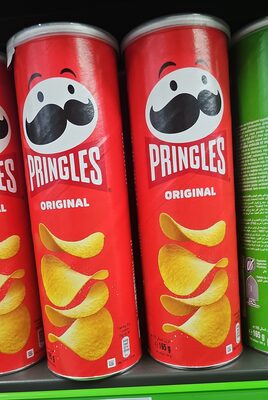
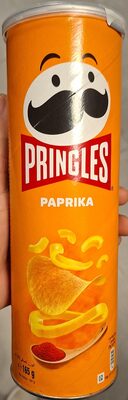
Nutrition per 100 g
| Nutrient | Pringles originale | Paprika Chips |
|---|---|---|
| Nutri-Score | d | d |
| NOVA group | 4 | 4 |
| Calories | 528 kcal | 500 kcal |
| Fat | 31 g | 28 g |
| Saturated fat | 3 g | 2.7 g |
| Sugars | 0.9 g | 6.1 g |
| Salt | 1 g | 1.3 g |
| Fiber | 4.1 g | 5.2 g |
| Protein | 6.2 g | 6.5 g |
| Additives | 3 | 7 |
| Allergens | Gluten, Soybeans | Gluten, Milk |
Green = better value for that nutrient (less sugar, fat, salt and calories; more fiber and protein).
Key differences
- Pringles originale has 85% less sugar (0.9 g vs 6.1 g).
- Pringles originale has 23% less salt (1 g vs 1.3 g).
- Paprika Chips has 21% more fiber (5.2 g vs 4.1 g).
- Only Pringles originale lists: Soybeans.
- Only Paprika Chips lists: Milk.
Ingredients
Pringles originale
Pommes de terre déshydratées, huile de tournesol, farine de maïs, farine de BLÉ, farine de riz, maltodextrine, émulsifiant (E471), huile de colza, sel, colorant (norbixine de rocou).
Paprika Chips
Dehydrated potatoes, sunflower oil, wheat flour, corn flour, rice flour, paprika seasoning (sugar, paprika powder, flavour enhancers (monosodium glutamate, disodium guanylate, disodium inosinate) dextrose, yeast powder, onion powder, salt, granulated broth (salt, hydrolysed vegetable protein, sunflower oil), flavourings, garlic powder, colour (paprika extract), acid (citric acid), sweet whey powder (milk)), maltodextrin, emulsifier (E471), salt, colour (annatto norbixin). May contain soy.
FAQ
Which is healthier: Pringles originale or Paprika Chips?
Overall, Pringles originale has the better nutritional profile on the measures we compare. We compare Nutri-Score, processing level and seven nutrients per 100 g. Your own needs (for example low sugar or high protein) may make a different choice better for you.
Which has fewer calories?
Paprika Chips has fewer calories: 500 kcal versus 528 kcal per 100 g.
Which has less sugar?
Pringles originale has less sugar: 0.9 g versus 6.1 g per 100 g.