
Pedialyte (Grape) - Advance Rehydration vs Ultima replenisher
Neither product is clearly better overall — it depends on what matters most to you.

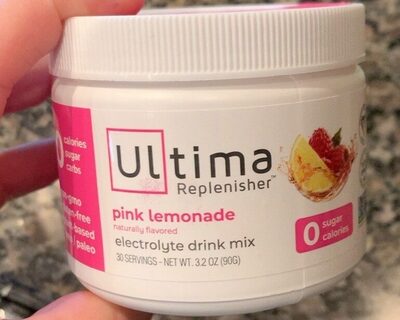
Nutrition per 100 g
| Nutrient | Pedialyte (Grape) - Advance... | Ultima replenisher |
|---|---|---|
| Nutri-Score | b | — |
| NOVA group | 4 | 4 |
| Calories | 4 kcal | 0 kcal |
| Fat | 0 g | 0 g |
| Saturated fat | 0 g | 0 g |
| Sugars | 1.2 g | 0 g |
| Salt | 0.4 g | 4.6 g |
| Protein | 0 g | 0 g |
| Additives | 2 | 2 |
| Allergens | None listed | None listed |
Green = better value for that nutrient (less sugar, fat, salt and calories; more fiber and protein).
Key differences
- Ultima replenisher has no sugar, while Pedialyte (Grape) - Advance Rehydration has 1.2 g.
- Pedialyte (Grape) - Advance Rehydration has 92% less salt (0.4 g vs 4.6 g).
Ingredients
Pedialyte (Grape) - Advance Rehydration
WATER, DETRAGE LESS THAN 0.5% OF S CITRATE, CITRIC ACID, SALT, POTASSIUM CHLORIDE ARTIFICAL FLAVOR SUCRALOGE ACESULFAME POTASSIUM, ZINC GLUCONATE RED 40 AND BLUE 1 INGREDIENTES: AGUA, DEXTROSA MENOS DEL 0.5% DE CITRATO DE 1000 AGOS CTRICO, SAL QORURO DE POTAGIO SARD ATGAL SUCRALOSA ACESU AMO DE POTASIO GLUCOM DE ZINC 40Y ADILS ABBOTT NUTRITION ABBOTT LABORATORIES PRODUCT OF MENCO/PRODUCTO DE MÉXICO H
Ultima replenisher
Citric acid, magnesium citrate, potassium phosphate, potassium aspartate, calcium citrate, natural flavors, calcium ascorbate, salt, rebaudioside a (organic stevia leaf extract), color blend (beet juice and annatto extract), zinc citrate, manganese citrate and cherry juice powder.
FAQ
Which is healthier: Pedialyte (Grape) - Advance Rehydration or Ultima replenisher?
Neither product is clearly better overall — it depends on what matters most to you. We compare Nutri-Score, processing level and seven nutrients per 100 g. Your own needs (for example low sugar or high protein) may make a different choice better for you.
Which has fewer calories?
Ultima replenisher has fewer calories: 0 kcal versus 4 kcal per 100 g.
Which has less sugar?
Ultima replenisher has less sugar: 0 g versus 1.2 g per 100 g.