
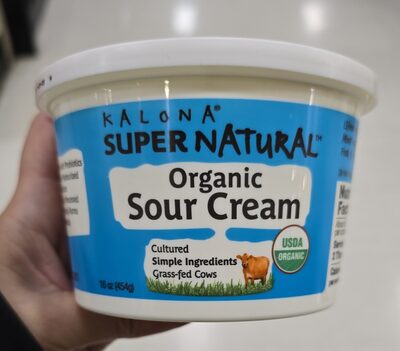
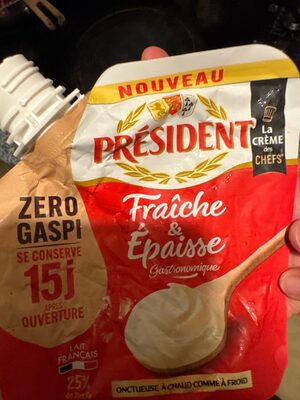
Organic Sour Cream vs Creme fraiche et epaisse gastronomique
Overall, Organic Sour Cream has the better nutritional profile on the measures we compare. It wins on 4 of our comparison points versus 0.
Nutrition per 100 g
| Nutrient | Organic Sour Cream | Creme fraiche et epaisse gas... |
|---|---|---|
| Nutri-Score | d | d |
| NOVA group | — | 1 |
| Calories | 214 kcal | 250 kcal |
| Fat | 17.9 g | 25 g |
| Saturated fat | 10.7 g | 18 g |
| Sugars | 3.6 g | 3.6 g |
| Salt | 0.1 g | 0.1 g |
| Protein | 3.6 g | 2.3 g |
| Additives | 0 | 0 |
| Allergens | Milk | Milk |
Green = better value for that nutrient (less sugar, fat, salt and calories; more fiber and protein).
Key differences
- Organic Sour Cream has 14% fewer calories (214 kcal vs 250 kcal).
- Organic Sour Cream has 29% less fat (17.9 g vs 25 g).
- Organic Sour Cream has 41% less saturated fat (10.7 g vs 18 g).
- Organic Sour Cream has 36% more protein (3.6 g vs 2.3 g).
Ingredients
Organic Sour Cream
organic whole milk, organic cream, organic nonfat milk, died organic by mosa l, cremoris), enzymes live , active cultures (l, lactis and d ma organics, llc a 52247 #55-372 contains: milk daily value amount/serving 6% total carbohydrate 2g 15% dietary fiber og total sugars 19 7% 1% protein 19 % daily value 1% 0% includes og added sugars 0% 2% ka um 40mg 2%-iron omg 0% - potassium 50mg 0% how much a nutrient in a serving of food contributes to a ad for general nutrition advice 00000 00000 b
Creme fraiche et epaisse gastronomique
Crème légère, fermants lactiques
FAQ
Which is healthier: Organic Sour Cream or Creme fraiche et epaisse gastronomique?
Overall, Organic Sour Cream has the better nutritional profile on the measures we compare. We compare Nutri-Score, processing level and seven nutrients per 100 g. Your own needs (for example low sugar or high protein) may make a different choice better for you.
Which has fewer calories?
Organic Sour Cream has fewer calories: 214 kcal versus 250 kcal per 100 g.
Which has less sugar?
Organic Sour Cream has less sugar: 3.6 g versus 3.6 g per 100 g.