
Comparison
Organic Eggs vs PASTURE RAISED 18 Large Eggs Grade A
Overall, Organic Eggs has the better nutritional profile on the measures we compare. It wins on 4 of our comparison points versus 0.
Better choice
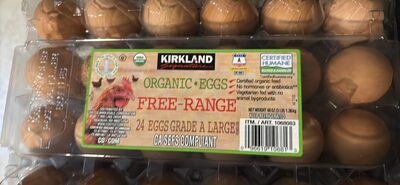
Organic Eggs
Costco Companies Inc. · 48 oz
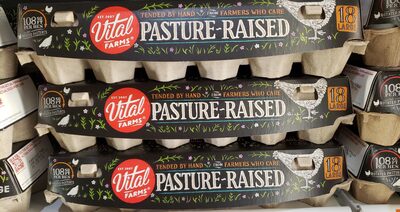
PASTURE RAISED 18 Large Eggs Grade A
Vital Farms · 18 Large Eggs
Nutrition per 100 g
| Nutrient | Organic Eggs | PASTURE RAISED 18 Large Eggs... |
|---|---|---|
| Nutri-Score | a | b |
| NOVA group | — | 1 |
| Calories | 140 kcal | 140 kcal |
| Fat | 10 g | 10 g |
| Saturated fat | 1.5 g | 3 g |
| Sugars | 0 g | 0 g |
| Salt | 0.2 g | 0.8 g |
| Fiber | 0 g | 0 g |
| Protein | 12 g | 12 g |
| Additives | 0 | 0 |
| Allergens | None listed | Eggs |
Green = better value for that nutrient (less sugar, fat, salt and calories; more fiber and protein).
Key differences
- Organic Eggs has 50% less saturated fat (1.5 g vs 3 g).
- Organic Eggs has 78% less salt (0.2 g vs 0.8 g).
- Organic Eggs has the better Nutri-Score.
- Only PASTURE RAISED 18 Large Eggs Grade A lists: Eggs.
Ingredients
Organic Eggs
Organic Eggs
PASTURE RAISED 18 Large Eggs Grade A
Egg
FAQ
Which is healthier: Organic Eggs or PASTURE RAISED 18 Large Eggs Grade A?
Overall, Organic Eggs has the better nutritional profile on the measures we compare. We compare Nutri-Score, processing level and seven nutrients per 100 g. Your own needs (for example low sugar or high protein) may make a different choice better for you.
Which has fewer calories?
Organic Eggs has fewer calories: 140 kcal versus 140 kcal per 100 g.
Which has less sugar?
Organic Eggs has less sugar: 0 g versus 0 g per 100 g.
More comparisons
PASTURE RAISED 18 Large... vs Œufs Frais
PASTURE RAISED 18 Large... vs Oeufs frais de poules
Large White Eggs vs PASTURE RAISED 18 Large...
Spinach Egg White Fritta... vs PASTURE RAISED 18 Large...
PASTURE RAISED 18 Large... vs Kotimaista Isot Vapaan K...
Organic Eggs vs Œufs Frais
Organic Eggs vs Oeufs frais de poules
Large White Eggs vs Organic Eggs