
Orange & Passion Fruit Fruit Blend vs Aloe drink - Pomegranate
Overall, Orange & Passion Fruit Fruit Blend has the better nutritional profile on the measures we compare. It wins on 1 of our comparison points versus 0.
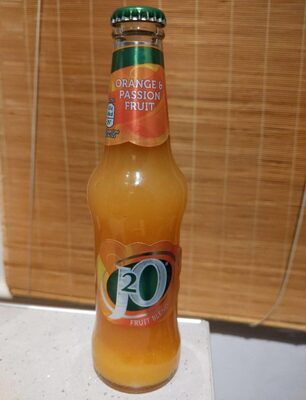
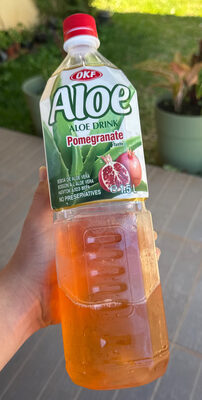
Nutrition per 100 g
| Nutrient | Orange & Passion Fruit Fruit... | Aloe drink - Pomegranate |
|---|---|---|
| Nutri-Score | d | d |
| NOVA group | 4 | 4 |
| Calories | 19 kcal | 21 kcal |
| Fat | 0 g | 0 g |
| Saturated fat | 0 g | 0 g |
| Sugars | 4 g | 5 g |
| Salt | 0 g | 0 g |
| Protein | 0 g | 0 g |
| Additives | 6 | 7 |
| Allergens | Orange | None listed |
Green = better value for that nutrient (less sugar, fat, salt and calories; more fiber and protein).
Key differences
- Orange & Passion Fruit Fruit Blend has 20% less sugar (4 g vs 5 g).
- Only Orange & Passion Fruit Fruit Blend lists: Orange.
Ingredients
Orange & Passion Fruit Fruit Blend
Water, Fruit Juices from Concentrate (Orange 15% Passion Fruit 3%), Orange Fruit from Concentrate (726) Sugar Acid (Citric Acid), Stabiliser (Pectin), Flavourings, Preservative (Potassium Sorbate), Colour (Anthocyanins), Antioxidant (Ascorbic Acid). Sweetener (Sucralose).
Aloe drink - Pomegranate
Eau, jus d'aloe vera (15%), gel d'aloe vera (5%), sucre de canne, régulateur d'acidité: acide citrique, citrate de sodium, stabilisants: lactate de calcium, gomme gellane, arôme grenade, colorants: anthocyanes (E163), cochenille (E120), édulcorant: sucralose, fructose. Boisson à l'aloe vera avec sucre et édulcorant /
FAQ
Which is healthier: Orange & Passion Fruit Fruit Blend or Aloe drink - Pomegranate?
Overall, Orange & Passion Fruit Fruit Blend has the better nutritional profile on the measures we compare. We compare Nutri-Score, processing level and seven nutrients per 100 g. Your own needs (for example low sugar or high protein) may make a different choice better for you.
Which has fewer calories?
Orange & Passion Fruit Fruit Blend has fewer calories: 19 kcal versus 21 kcal per 100 g.
Which has less sugar?
Orange & Passion Fruit Fruit Blend has less sugar: 4 g versus 5 g per 100 g.