
Naan Breads vs Naan bread
Overall, Naan Breads has the better nutritional profile on the measures we compare. It wins on 4 of our comparison points versus 1.
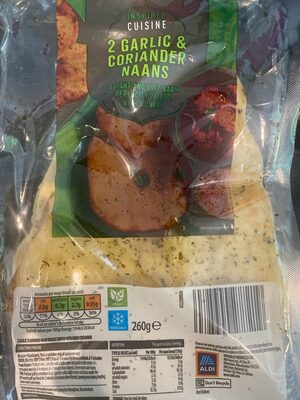
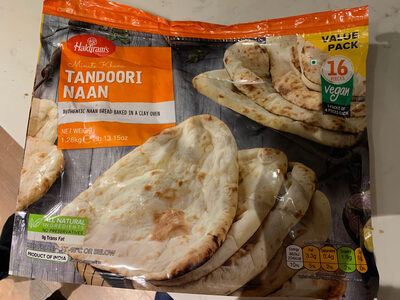
Nutrition per 100 g
| Nutrient | Naan Breads | Naan bread |
|---|---|---|
| Nutri-Score | b | c |
| NOVA group | 4 | — |
| Calories | 283 kcal | 255 kcal |
| Fat | 5.7 g | 4.2 g |
| Saturated fat | 0.5 g | 0.5 g |
| Sugars | 2.1 g | 2.4 g |
| Salt | 0.7 g | 0.8 g |
| Fiber | 3.2 g | 0.2 g |
| Protein | 7.6 g | 6.7 g |
| Additives | 3 | 2 |
| Allergens | Gluten | Gluten |
Green = better value for that nutrient (less sugar, fat, salt and calories; more fiber and protein).
Key differences
- Naan bread has 26% less fat (4.2 g vs 5.7 g).
- Naan Breads has 94% more fiber (3.2 g vs 0.2 g).
- Naan Breads has 12% more protein (7.6 g vs 6.7 g).
- Naan Breads has the better Nutri-Score.
Ingredients
Naan Breads
wheat flour (wheat flour, calcium carbonate, niacin, iron, thiamin), water, rapeseed oil, yeast, spirit vinegar, raising agents: diphosphates, sodium carbonates, calcium phosphate, dried coriander, kalonji seeds, salt, preservative galdium propionate, natural flavouring
Naan bread
Wheat Flour (62%), Water, Refined Sunflower Oil, Sugar, Salt, Baking Powder (Maize Starch, Raising Agent-E500, Sodium Aluminium Sulphate-E521) andast. For Allergens - See ingedients in BOLD Authentisches naan-brot im lehmofen gebacken. ZUTATEN: Weizenmehl (62%), Wasser, raffiniertes Sonnenblumenöl, Zucker, Salz, Backpulver (Maisstärke, Backtriebmittel-E500, Aluminiumnatriumsulfat-E521) und Hefe. Allergene - Siehe Inhaltsstoffe in FETTDRUCK
FAQ
Which is healthier: Naan Breads or Naan bread?
Overall, Naan Breads has the better nutritional profile on the measures we compare. We compare Nutri-Score, processing level and seven nutrients per 100 g. Your own needs (for example low sugar or high protein) may make a different choice better for you.
Which has fewer calories?
Naan bread has fewer calories: 255 kcal versus 283 kcal per 100 g.
Which has less sugar?
Naan Breads has less sugar: 2.1 g versus 2.4 g per 100 g.