
Morceaux à dévorer vs Carotte poulet 6 mois
Overall, Carotte poulet 6 mois has the better nutritional profile on the measures we compare. It wins on 4 of our comparison points versus 1.
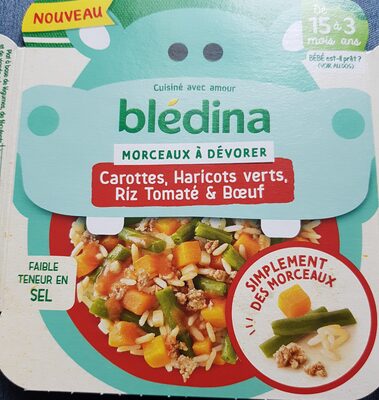
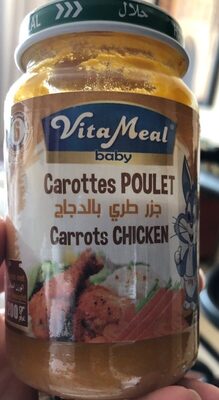
Nutrition per 100 g
| Nutrient | Morceaux à dévorer | Carotte poulet 6 mois |
|---|---|---|
| Nutri-Score | — | — |
| NOVA group | — | — |
| Calories | 71 kcal | 54 kcal |
| Fat | 2.6 g | 0.1 g |
| Saturated fat | 1 g | 0.1 g |
| Sugars | 2.1 g | 0.1 g |
| Salt | 0.2 g | 0 g |
| Fiber | 1.3 g | — |
| Protein | 2.7 g | 2.4 g |
| Additives | 0 | 0 |
| Allergens | Gluten, Milk, Soybeans | None listed |
Green = better value for that nutrient (less sugar, fat, salt and calories; more fiber and protein).
Key differences
- Carotte poulet 6 mois has 24% fewer calories (54 kcal vs 71 kcal).
- Carotte poulet 6 mois has 96% less fat (0.1 g vs 2.6 g).
- Carotte poulet 6 mois has 90% less saturated fat (0.1 g vs 1 g).
- Carotte poulet 6 mois has 95% less sugar (0.1 g vs 2.1 g).
- Morceaux à dévorer has 11% more protein (2.7 g vs 2.4 g).
- Only Morceaux à dévorer lists: Gluten, Milk, Soybeans.
Ingredients
Morceaux à dévorer
Carottes 22,00 % - Eau - Haricots verts 9,00 %-Riz précuit 8,40 % - Préparation de viande de bœuf hachée précuite (Origine France) 8,70 % (viande de bœuf 8,00 %, eau, fécule de pomme de terre) - Oignons-Coulis de tomates 6,30 % - Panais - Crème fraîche (LAT) - Amidon de riz - Huile de colza - Gélifiant : Gomme de guar-Sel-Ail - Oignons - Herbes aromatiques-Poireaux en poudre. Peut contenir des fraces de GLUTEN, de POISSON, de MOUTARDE, de CELERI, de SOJA et de MOLLUSQUES. 29971 Pour 100 g
Carotte poulet 6 mois
Not available.
FAQ
Which is healthier: Morceaux à dévorer or Carotte poulet 6 mois?
Overall, Carotte poulet 6 mois has the better nutritional profile on the measures we compare. We compare Nutri-Score, processing level and seven nutrients per 100 g. Your own needs (for example low sugar or high protein) may make a different choice better for you.
Which has fewer calories?
Carotte poulet 6 mois has fewer calories: 54 kcal versus 71 kcal per 100 g.
Which has less sugar?
Carotte poulet 6 mois has less sugar: 0.1 g versus 2.1 g per 100 g.