
Melton Mowbray pork pie vs Morrison’s Melton Mowbray large pork pie
Overall, Melton Mowbray pork pie has the better nutritional profile on the measures we compare. It wins on 2 of our comparison points versus 0.
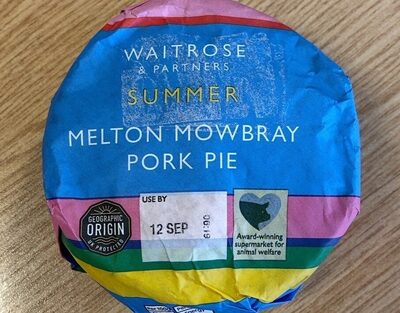
Melton Mowbray pork pie
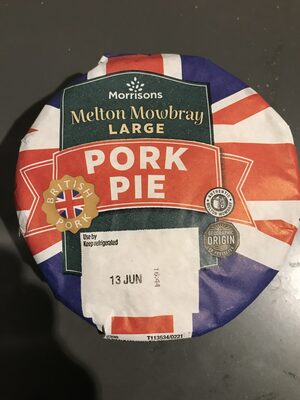
Morrison’s Melton Mowbray large pork pie
Nutrition per 100 g
| Nutrient | Melton Mowbray pork pie | Morrison’s Melton Mowbray la... |
|---|---|---|
| Nutri-Score | d | d |
| NOVA group | 4 | 4 |
| Calories | 359 kcal | 365 kcal |
| Fat | 26 g | 26.2 g |
| Saturated fat | 9.4 g | 9.5 g |
| Sugars | 0.8 g | 1.3 g |
| Salt | 1 g | 1 g |
| Fiber | 1 g | 1.1 g |
| Protein | 12.1 g | 9.7 g |
| Additives | 1 | 1 |
| Allergens | Eggs, Gluten | Eggs, Gluten |
Green = better value for that nutrient (less sugar, fat, salt and calories; more fiber and protein).
Key differences
- Melton Mowbray pork pie has 38% less sugar (0.8 g vs 1.3 g).
- Melton Mowbray pork pie has 20% more protein (12.1 g vs 9.7 g).
Ingredients
Melton Mowbray pork pie
Wheat flour (wheat flour, calcium carbonate, iron, niacin, thiamin), British pork (32%), pork lard, water, pork fat, palm oil (certified sustainable), rapeseed oil, potato starch, salt, pasteurised free range egg, pork gelatine, ground white pepper, ground nutmeg
Morrison’s Melton Mowbray large pork pie
Large Melton Mowbray Pork Pie Ingredients Pork (34%), 440ge Wheat flour (wheat flour, calcium carbonate, iron, niacin, thiamin), Water, Pork lard, Pork fat, Potato starch, Palm oil, Rapeseed oil, Salt, Ground white pepper, Pork gelatine, Pasteurised egg, Ground nutmeg. ALLERGY ADVICE For allergens, including cereals containing gluten, see ingredients in bold. Nutrition pical lues
FAQ
Which is healthier: Melton Mowbray pork pie or Morrison’s Melton Mowbray large pork pie?
Overall, Melton Mowbray pork pie has the better nutritional profile on the measures we compare. We compare Nutri-Score, processing level and seven nutrients per 100 g. Your own needs (for example low sugar or high protein) may make a different choice better for you.
Which has fewer calories?
Melton Mowbray pork pie has fewer calories: 359 kcal versus 365 kcal per 100 g.
Which has less sugar?
Melton Mowbray pork pie has less sugar: 0.8 g versus 1.3 g per 100 g.