
Marja Puree kuningatar vs Lime & Veriappelsiini Sorbetti
Overall, Marja Puree kuningatar has the better nutritional profile on the measures we compare. It wins on 5 of our comparison points versus 0.
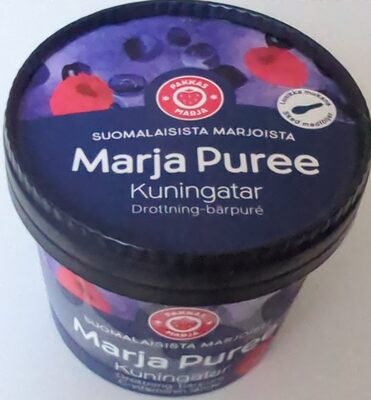
Marja Puree kuningatar
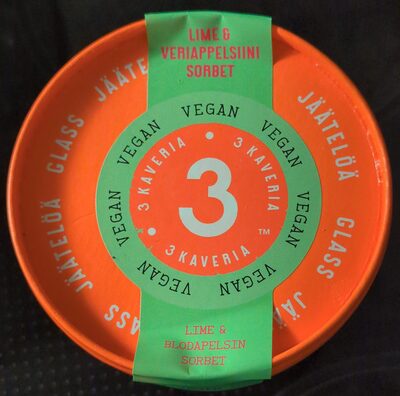
Lime & Veriappelsiini Sorbetti
Nutrition per 100 g
| Nutrient | Marja Puree kuningatar | Lime & Veriappelsiini Sorbet... |
|---|---|---|
| Nutri-Score | c | c |
| NOVA group | 4 | 4 |
| Calories | 99 kcal | 185 kcal |
| Fat | 0.9 g | 4.5 g |
| Saturated fat | 0 g | 1 g |
| Sugars | 18 g | 22 g |
| Salt | 0 g | 0 g |
| Fiber | 2.9 g | — |
| Protein | 0.8 g | 0.3 g |
| Additives | 1 | 1 |
| Allergens | None listed | None listed |
Green = better value for that nutrient (less sugar, fat, salt and calories; more fiber and protein).
Key differences
- Marja Puree kuningatar has 46% fewer calories (99 kcal vs 185 kcal).
- Marja Puree kuningatar has 80% less fat (0.9 g vs 4.5 g).
- Marja Puree kuningatar has no saturated fat, while Lime & Veriappelsiini Sorbetti has 1 g.
- Marja Puree kuningatar has 18% less sugar (18 g vs 22 g).
- Marja Puree kuningatar has 63% more protein (0.8 g vs 0.3 g).
Ingredients
Marja Puree kuningatar
Metsämustikka 65 %, vadelma 20%, nestesokeri (sokeria 11 % ja vettä), sakeuttamisaine guarkumi
Lime & Veriappelsiini Sorbetti
Limejuice (21 %), blodapelsinjuice (21 %), vatten, glukossirap, socker, dextros, potatisstärkelse, rypsolja, rispulver (rissirappulver, risstärkelse, rismjöl), emulgeringsmedel (mono - och diglycerider av fettsyror), förtjockningsmedel (fruktkärnmjol). Vegansk. Glutenfri. Kan innehålla spår av mjölk, ägg, jordnötter, cashewnötter, hasselnötter, pekannötter, mandel och pistage.
FAQ
Which is healthier: Marja Puree kuningatar or Lime & Veriappelsiini Sorbetti?
Overall, Marja Puree kuningatar has the better nutritional profile on the measures we compare. We compare Nutri-Score, processing level and seven nutrients per 100 g. Your own needs (for example low sugar or high protein) may make a different choice better for you.
Which has fewer calories?
Marja Puree kuningatar has fewer calories: 99 kcal versus 185 kcal per 100 g.
Which has less sugar?
Marja Puree kuningatar has less sugar: 18 g versus 22 g per 100 g.