
Kip curry vs Chicken Pâté
Neither product is clearly better overall — it depends on what matters most to you.
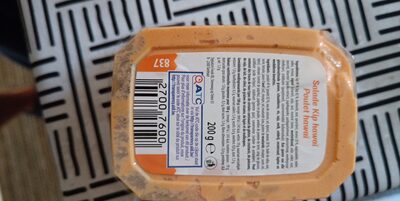
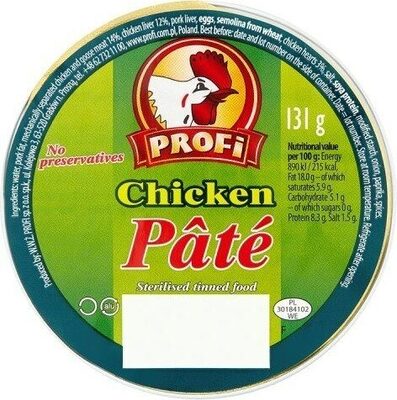
Nutrition per 100 g
| Nutrient | Kip curry | Chicken Pâté |
|---|---|---|
| Nutri-Score | c | d |
| NOVA group | 4 | 4 |
| Calories | 241 kcal | 187 kcal |
| Fat | 19 g | 14 g |
| Saturated fat | 1.8 g | 4.8 g |
| Sugars | 5.4 g | 0.7 g |
| Salt | 1.3 g | 1.4 g |
| Fiber | 0.6 g | 0.7 g |
| Protein | 8.8 g | 8.6 g |
| Additives | 4 | 1 |
| Allergens | Chicken, Eggs, Mustard, Celeri, Oeuf | Eggs, Gluten, Soybeans |
Green = better value for that nutrient (less sugar, fat, salt and calories; more fiber and protein).
Key differences
- Chicken Pâté has 22% fewer calories (187 kcal vs 241 kcal).
- Chicken Pâté has 26% less fat (14 g vs 19 g).
- Kip curry has 63% less saturated fat (1.8 g vs 4.8 g).
- Chicken Pâté has 87% less sugar (0.7 g vs 5.4 g).
- Kip curry has the better Nutri-Score.
- Only Kip curry lists: Chicken, Mustard, Celeri, Oeuf.
- Only Chicken Pâté lists: Gluten, Soybeans.
Ingredients
Kip curry
chicken 49% (chicken 82%, cooking water, salt, spices), pineapple 20%, rapeseed oil, water, sugar, tomato, egg yolk (soil), vinegar, salt, mustard (water, mustard seeds, vinegar, sugar, salt, spice), paprika extract, paprika powder, starch, glucose syrup, acidifier (lactic acid), stabilizer (guar gum), preservative (potassium sorbate), may contain traces of fish, crustaceans, gluten, celery, soya, molluscs, sesame seeds, milk and lupine,
Chicken Pâté
Water, pork fat, mechanically separated chicken meat 14 %, chicken liver 12%, pork liver, semolina, chicken hearts 3%, eggs, soy protein, salt, modified starch, onion, bell pepper, spices.
FAQ
Which is healthier: Kip curry or Chicken Pâté?
Neither product is clearly better overall — it depends on what matters most to you. We compare Nutri-Score, processing level and seven nutrients per 100 g. Your own needs (for example low sugar or high protein) may make a different choice better for you.
Which has fewer calories?
Chicken Pâté has fewer calories: 187 kcal versus 241 kcal per 100 g.
Which has less sugar?
Chicken Pâté has less sugar: 0.7 g versus 5.4 g per 100 g.