
Comparison
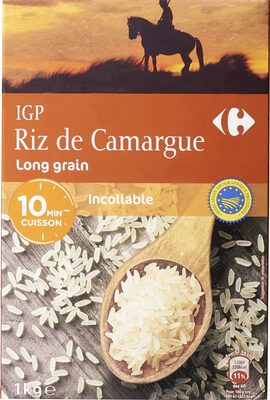
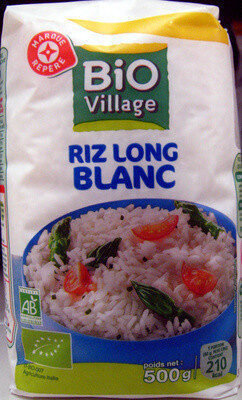
IGP Riz de Camargue vs Riz long blanc Bio
Neither product is clearly better overall — it depends on what matters most to you.
Nutrition per 100 g
| Nutrient | IGP Riz de Camargue | Riz long blanc Bio |
|---|---|---|
| Nutri-Score | b | b |
| NOVA group | — | 1 |
| Calories | 353 kcal | 352 kcal |
| Fat | 1.4 g | 0.9 g |
| Saturated fat | 0.3 g | 0.2 g |
| Sugars | 0 g | 0.5 g |
| Salt | 0 g | 0 g |
| Fiber | 3 g | 1.1 g |
| Protein | 6.5 g | 7.4 g |
| Additives | 0 | 0 |
| Allergens | None listed | None listed |
Green = better value for that nutrient (less sugar, fat, salt and calories; more fiber and protein).
Key differences
- Riz long blanc Bio has 36% less fat (0.9 g vs 1.4 g).
- IGP Riz de Camargue has no sugar, while Riz long blanc Bio has 0.5 g.
- IGP Riz de Camargue has 63% more fiber (3 g vs 1.1 g).
- Riz long blanc Bio has 12% more protein (7.4 g vs 6.5 g).
Ingredients
IGP Riz de Camargue
IGP Riz de Camargue long grain étuvé de qualité supérieure.
Riz long blanc Bio
Riz long de qualité supérieure issu de l'agriculture biologique. Traces de gluten, soja et graines de sésame.
FAQ
Which is healthier: IGP Riz de Camargue or Riz long blanc Bio?
Neither product is clearly better overall — it depends on what matters most to you. We compare Nutri-Score, processing level and seven nutrients per 100 g. Your own needs (for example low sugar or high protein) may make a different choice better for you.
Which has fewer calories?
Riz long blanc Bio has fewer calories: 352 kcal versus 353 kcal per 100 g.
Which has less sugar?
IGP Riz de Camargue has less sugar: 0 g versus 0.5 g per 100 g.
More comparisons
IGP Riz de Camargue vs Riz long grain incollabl...
Riz Long Grain vs IGP Riz de Camargue
Riz long grain vs IGP Riz de Camargue
IGP Riz de Camargue vs Thaï
IGP Riz de Camargue vs Ta Riz Med 800G C20
Riz long blanc Bio vs Riz long grain incollabl...
Riz long blanc Bio vs Ta Riz Med 800G C20
Riz long blanc Bio vs Riz Thai