
Iced tea green vs Eistee Zitrone Zero
Overall, Eistee Zitrone Zero has the better nutritional profile on the measures we compare. It wins on 2 of our comparison points versus 0.
Nutrition per 100 ml
| Nutrient | Iced tea green | Eistee Zitrone Zero |
|---|---|---|
| Nutri-Score | — | c |
| NOVA group | 4 | 4 |
| Calories | 9 kcal | 1 kcal |
| Fat | 0 g | 0 g |
| Saturated fat | 0 g | 0 g |
| Sugars | 2.2 g | 0 g |
| Salt | 0 g | 0 g |
| Fiber | 0 g | 0 g |
| Protein | 0 g | 0 g |
| Additives | 4 | 7 |
| Allergens | None listed | None listed |
Green = better value for that nutrient (less sugar, fat, salt and calories; more fiber and protein).
Key differences
- Eistee Zitrone Zero has 89% fewer calories (1 kcal vs 9 kcal).
- Eistee Zitrone Zero has no sugar, while Iced tea green has 2.2 g.
Ingredients
Iced tea green
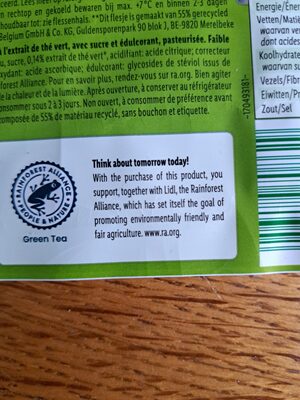
Water, suiker, 0,14% groene thee-extract*, voedingszuur: citroenzuur; zuurteregelaar: natriumcitraten; antioxidant: ascorbinezuur; zoetstof: steviolglycosiden uit Stevia; natuurlijk aroma. *Rainforest Alliance gecertificeerd. Lees meer op ra.org. Voor gebruik goed schudden. Tegen warmte en zonlicht beschermen. Na openen rechtop en gekoeld bewaren bij max. +7°C en binnen 2-3 dagen consumeren. Ongeopend,
Eistee Zitrone Zero
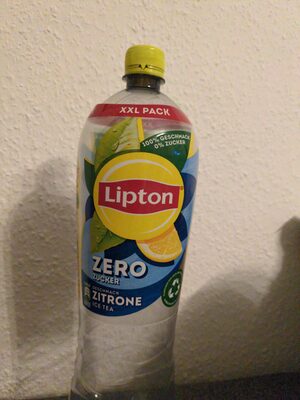
Wasser, Schwarzer Tee-Extrakt (0,14%), Säuerungsmittel (Apfelsäure, Citronensäure), Zitronensaft aus Zitronensaftkonzentrat (0,1%), Aroma, Säureregulator Trinatriumcitrat, Antioxidationsmittel Ascorbinsäure, Süßungsmittel (Sucralose, Acesulfam-K). Rainforest Alliance Certified. Mehr Informationen unter ra.org.
FAQ
Which is healthier: Iced tea green or Eistee Zitrone Zero?
Overall, Eistee Zitrone Zero has the better nutritional profile on the measures we compare. We compare Nutri-Score, processing level and seven nutrients per 100 g. Your own needs (for example low sugar or high protein) may make a different choice better for you.
Which has fewer calories?
Eistee Zitrone Zero has fewer calories: 1 kcal versus 9 kcal per 100 g.
Which has less sugar?
Eistee Zitrone Zero has less sugar: 0 g versus 2.2 g per 100 g.