
Holy hydratation vs VITTEL 100% NATUREL eau aromatisée Citron & Citron vert 1L
Overall, Holy hydratation has the better nutritional profile on the measures we compare. It wins on 1 of our comparison points versus 0.

Holy hydratation
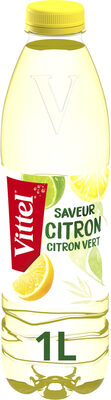
VITTEL 100% NATUREL eau aromatisée Citron & Citron vert 1L
Nutrition per 100 ml
| Nutrient | Holy hydratation | VITTEL 100% NATUREL eau arom... |
|---|---|---|
| Nutri-Score | — | b |
| NOVA group | 4 | 4 |
| Calories | 4 kcal | 7 kcal |
| Fat | 0 g | 0 g |
| Saturated fat | 0 g | 0 g |
| Sugars | 0.1 g | 1.5 g |
| Salt | 0 g | 0 g |
| Fiber | 0.1 g | 0 g |
| Protein | 0 g | 0 g |
| Additives | 8 | 0 |
| Allergens | None listed | None listed |
Green = better value for that nutrient (less sugar, fat, salt and calories; more fiber and protein).
Key differences
- Holy hydratation has 91% less sugar (0.1 g vs 1.5 g).
Ingredients
Holy hydratation
Hydration Coconut Boisson d'hydratation avec électrolytes et minéraux. Ingrédients: Poudre d'eau de coco, acidifiants (acide citrique, acide malique), phosphate dipotassique, arôme naturel, citrate de trimagnésium, poudre de jus de citron, inuline, antiagglomérants (dioxyde de silicium, phosphate tricalcique), édulcorants (stévioglycosides de stévia, sucralose), poudre de jus de baies de goji, sel gemme, citrate de zinc, chlorhydrate de pyridoxine, cyanocobalamine. Remarque:
VITTEL 100% NATUREL eau aromatisée Citron & Citron vert 1L
Eau minérale naturelle Vittel 95.2%, sucre liquide 2,2%, jus de citron, arôme naturel de citron-citron vert.
FAQ
Which is healthier: Holy hydratation or VITTEL 100% NATUREL eau aromatisée Citron & Citron vert 1L?
Overall, Holy hydratation has the better nutritional profile on the measures we compare. We compare Nutri-Score, processing level and seven nutrients per 100 g. Your own needs (for example low sugar or high protein) may make a different choice better for you.
Which has fewer calories?
Holy hydratation has fewer calories: 4 kcal versus 7 kcal per 100 g.
Which has less sugar?
Holy hydratation has less sugar: 0.1 g versus 1.5 g per 100 g.