
Diet Half and Half Tea Lemonade vs Half ice tealemonade
Overall, Diet Half and Half Tea Lemonade has the better nutritional profile on the measures we compare. It wins on 4 of our comparison points versus 0.
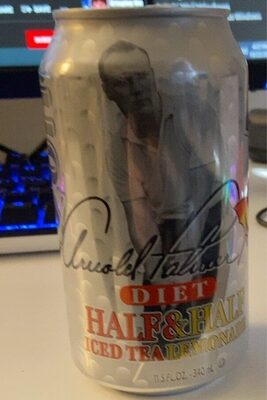
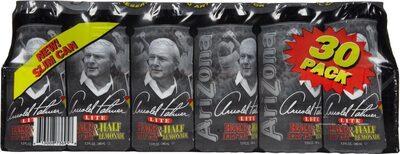
Nutrition per 100 ml
| Nutrient | Diet Half and Half Tea Lemon... | Half ice tealemonade |
|---|---|---|
| Nutri-Score | c | e |
| NOVA group | 4 | 4 |
| Calories | 3 kcal | 24 kcal |
| Fat | 0 g | 0 g |
| Saturated fat | 0 g | 0 g |
| Sugars | 0.3 g | 5.3 g |
| Salt | 0 g | 0 g |
| Fiber | 0 g | 0 g |
| Protein | 0 g | 0 g |
| Additives | 4 | 4 |
| Allergens | None listed | None listed |
Green = better value for that nutrient (less sugar, fat, salt and calories; more fiber and protein).
Key differences
- Diet Half and Half Tea Lemonade has 88% fewer calories (3 kcal vs 24 kcal).
- Diet Half and Half Tea Lemonade has 95% less sugar (0.3 g vs 5.3 g).
- Diet Half and Half Tea Lemonade has the better Nutri-Score.
Ingredients
Diet Half and Half Tea Lemonade
Premium brewed blend of black teas using filtered water, lemon juice from concentrate,pear juice from concentrate citric acid, natural flavors, ascorbic acid (vitamin c), malic acid, sucralose, (splenda brand), gum acacia.
Half ice tealemonade
Premium brewed blend of black teas using filtered water, high fructose corn syrup (glucose-fructose syrup), lemon juice from concentrate, pear juice from concentrate citric acid, ascorbic acid (vitamin c), natural flavors, sucralose (splenda brand), acesulfame potassium, gum acacia.
FAQ
Which is healthier: Diet Half and Half Tea Lemonade or Half ice tealemonade?
Overall, Diet Half and Half Tea Lemonade has the better nutritional profile on the measures we compare. We compare Nutri-Score, processing level and seven nutrients per 100 g. Your own needs (for example low sugar or high protein) may make a different choice better for you.
Which has fewer calories?
Diet Half and Half Tea Lemonade has fewer calories: 3 kcal versus 24 kcal per 100 g.
Which has less sugar?
Diet Half and Half Tea Lemonade has less sugar: 0.3 g versus 5.3 g per 100 g.