
Classic Italian Bread vs Burger
Neither product is clearly better overall — it depends on what matters most to you.
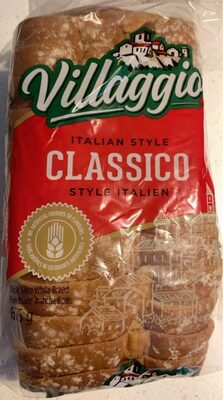
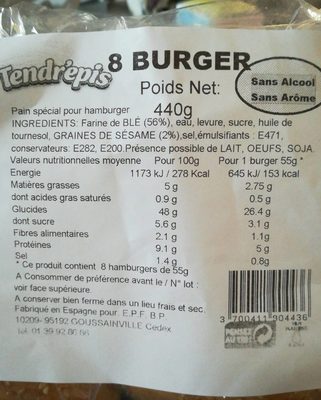
Nutrition per 100 g
| Nutrient | Classic Italian Bread | Burger |
|---|---|---|
| Nutri-Score | d | c |
| NOVA group | 4 | 4 |
| Calories | 250 kcal | 278 kcal |
| Fat | 3.1 g | 5 g |
| Saturated fat | 0 g | 0.9 g |
| Sugars | 0 g | 5.6 g |
| Salt | 2.5 g | 1.4 g |
| Fiber | 0 g | 7 g |
| Protein | 9.4 g | 9.1 g |
| Additives | 6 | 3 |
| Allergens | Gluten, Soybeans | Gluten, Sesame seeds |
Green = better value for that nutrient (less sugar, fat, salt and calories; more fiber and protein).
Key differences
- Classic Italian Bread has 10% fewer calories (250 kcal vs 278 kcal).
- Classic Italian Bread has 37% less fat (3.1 g vs 5 g).
- Classic Italian Bread has no saturated fat, while Burger has 0.9 g.
- Classic Italian Bread has no sugar, while Burger has 5.6 g.
- Burger has 44% less salt (1.4 g vs 2.5 g).
- Burger has 100% more fiber (7 g vs 0 g).
- Burger has the better Nutri-Score.
- Only Classic Italian Bread lists: Soybeans.
- Only Burger lists: Sesame seeds.
Ingredients
Classic Italian Bread
Enriched wheat flour, Water, Sugar, Yeast*, Vegetable oil (canola or soybean), Salt, Vinegar*, Wheat gluten*, Calcium propionate, Sodium stearoyl-2-lactylate, Sorbic acid, Acetylated tartaric acid esters of mono and diglycerides, Soybean lecithin. *Ingredients may vary. May contain: Sesame seeds.
Burger
Farine de BLE (56%), eau, levure, sucre, huile de tournesol, GRAINES DE SÉSAME (2%), sel, émulsifiants: E471, conservateurs: E282, E200.
FAQ
Which is healthier: Classic Italian Bread or Burger?
Neither product is clearly better overall — it depends on what matters most to you. We compare Nutri-Score, processing level and seven nutrients per 100 g. Your own needs (for example low sugar or high protein) may make a different choice better for you.
Which has fewer calories?
Classic Italian Bread has fewer calories: 250 kcal versus 278 kcal per 100 g.
Which has less sugar?
Classic Italian Bread has less sugar: 0 g versus 5.6 g per 100 g.