
Chicken Meatballs vs Polpettone gran gusto
Neither product is clearly better overall — it depends on what matters most to you.
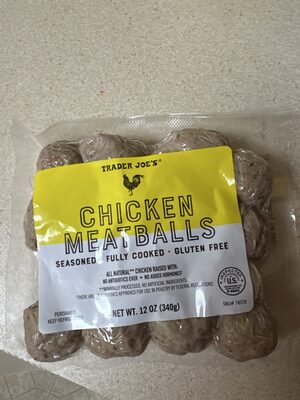
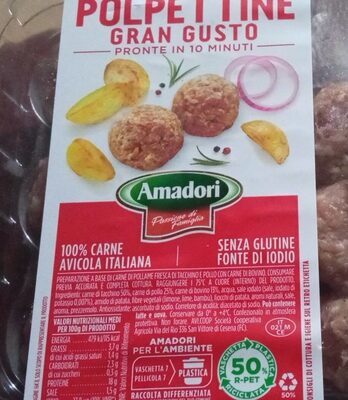
Nutrition per 100 g
| Nutrient | Chicken Meatballs | Polpettone gran gusto |
|---|---|---|
| Nutri-Score | c | c |
| NOVA group | 3 | 4 |
| Calories | 176 kcal | 114 kcal |
| Fat | 12.9 g | 3.7 g |
| Saturated fat | 3.5 g | 1.4 g |
| Sugars | 0 g | 0.3 g |
| Salt | 0.9 g | 1.5 g |
| Fiber | 0 g | 0 g |
| Protein | 16.5 g | 18 g |
| Additives | 1 | 3 |
| Allergens | Chicken | None listed |
Green = better value for that nutrient (less sugar, fat, salt and calories; more fiber and protein).
Key differences
- Polpettone gran gusto has 35% fewer calories (114 kcal vs 176 kcal).
- Polpettone gran gusto has 71% less fat (3.7 g vs 12.9 g).
- Polpettone gran gusto has 60% less saturated fat (1.4 g vs 3.5 g).
- Chicken Meatballs has no sugar, while Polpettone gran gusto has 0.3 g.
- Chicken Meatballs has 41% less salt (0.9 g vs 1.5 g).
- Chicken Meatballs is less processed (lower NOVA group).
- Only Chicken Meatballs lists: Chicken.
Ingredients
Chicken Meatballs
CHICKEN, SEA SALT, OREGANO, BASIL, VINEGAR POWDER, GRANULATED GARLIC, GRANULATED ONION, ROSEMARY EXTRACT, BLACK PEPPER, PARSLEY FLAKES
Polpettone gran gusto
Carne di tacchino 50%, carne di pollo 25%, carne di bovino 13%, acqua, sale iodato (sale, iodato di potassio 0,007%), amido di patata, fibre vegetali (limone, lime, bambu), fiocchi di patata, aromi naturali, sale, aroma, prezzemolo. Antiossidante: ascorbato di sodio. Corretore di acidità: diacetato di sodio.
FAQ
Which is healthier: Chicken Meatballs or Polpettone gran gusto?
Neither product is clearly better overall — it depends on what matters most to you. We compare Nutri-Score, processing level and seven nutrients per 100 g. Your own needs (for example low sugar or high protein) may make a different choice better for you.
Which has fewer calories?
Polpettone gran gusto has fewer calories: 114 kcal versus 176 kcal per 100 g.
Which has less sugar?
Chicken Meatballs has less sugar: 0 g versus 0.3 g per 100 g.