
BBQ Chicken Breast Slices vs Pollo
Overall, Pollo has the better nutritional profile on the measures we compare. It wins on 3 of our comparison points versus 1.
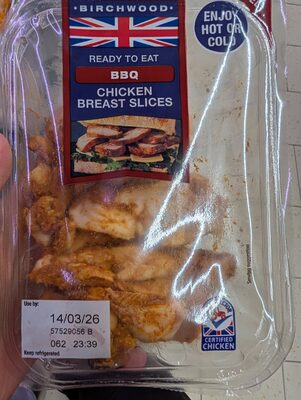
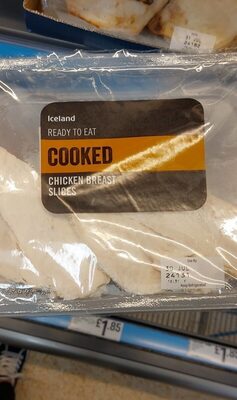
Nutrition per 100 g
| Nutrient | BBQ Chicken Breast Slices | Pollo |
|---|---|---|
| Nutri-Score | a | a |
| NOVA group | 4 | — |
| Calories | 138 kcal | 119 kcal |
| Fat | 2.8 g | 1.8 g |
| Saturated fat | 0.7 g | 0.6 g |
| Sugars | 4.4 g | 0 g |
| Salt | 0.6 g | 0.9 g |
| Fiber | 0.5 g | 0 g |
| Protein | 23.2 g | 25.6 g |
| Additives | 2 | 0 |
| Allergens | None listed | Chicken |
Green = better value for that nutrient (less sugar, fat, salt and calories; more fiber and protein).
Key differences
- Pollo has 14% fewer calories (119 kcal vs 138 kcal).
- Pollo has 36% less fat (1.8 g vs 2.8 g).
- Pollo has no sugar, while BBQ Chicken Breast Slices has 4.4 g.
- BBQ Chicken Breast Slices has 100% more fiber (0.5 g vs 0 g).
- Only Pollo lists: Chicken.
Ingredients
BBQ Chicken Breast Slices
Chicken Breast Fillet (92%), BBQ Seasoning (8%) (Sugar, Tomato Powder, Spices (Paprika, Black Pepper, Cinnamon, Ginger, Allspice, Fenugreek), Garlic Powder, Chilli Powder Blend (Chilli, Cumin, Salt, Garlic Powder, Oregano), Onion Powder, Hickory Smoked Maltodextrin (Potato), Yeast Extract (Yeast Extract, Salt, Caramelised Sugar [Caramelised Sugar Syrup, Carrier Potato Maltodextrin]), Citric Acid, Flavouring (Sunflower/Rapeseed Oils)), Sugar, Rapeseed Oil, Pea Starch, Maize Starch, Salt, Dextrose, Stabiliser: Triphosphate
Pollo
Chicken, Salt. Prepared with 105g of raw chicken per 100g of Energy finished product. WARNING! ALTHOUGH EVERY EFFORT HAS BEEN TAKEN TO REMOVE ALL BONES, SOME MAY REMAIN. STORAGE KEEP REFRIGERATED BELOW 5°C
FAQ
Which is healthier: BBQ Chicken Breast Slices or Pollo?
Overall, Pollo has the better nutritional profile on the measures we compare. We compare Nutri-Score, processing level and seven nutrients per 100 g. Your own needs (for example low sugar or high protein) may make a different choice better for you.
Which has fewer calories?
Pollo has fewer calories: 119 kcal versus 138 kcal per 100 g.
Which has less sugar?
Pollo has less sugar: 0 g versus 4.4 g per 100 g.